ERS Energy Sustainability & ESG

Building a Cleaner Future, One Megawatt at a Time

ERS Energy’s core business IS sustainability. Every project we deliver reduces carbon emissions, displaces fossil fuel generation, and advances Malaysia’s National Energy Transition Roadmap (NETR). Across 2,000+ projects in 6 countries over 17 years — here’s the impact so far.

~1.85M
Tonnes CO₂ Offset/Year
2 GWp+
Clean Capacity Installed
2,000+
Projects Delivered
2050
Carbon Neutral Target

Our ESG Framework

ERS Energy’s sustainability programme spans environmental stewardship, social responsibility, and governance standards, aligned with TCFD, GRI, and UN Global Compact reporting frameworks.

eco

Environmental (E)

  • 2 GWp+ clean energy deployed across 6 countries
  • ~1.85 million tonnes CO₂ avoided annually (Scope 4)
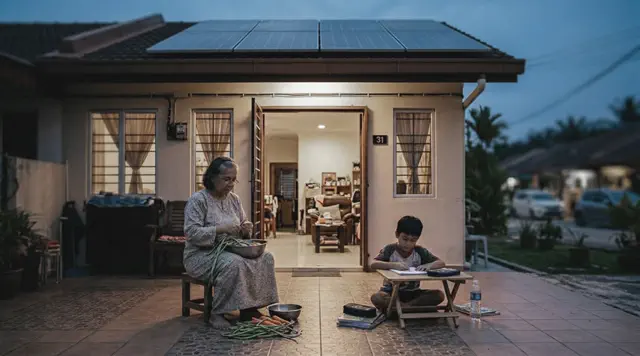
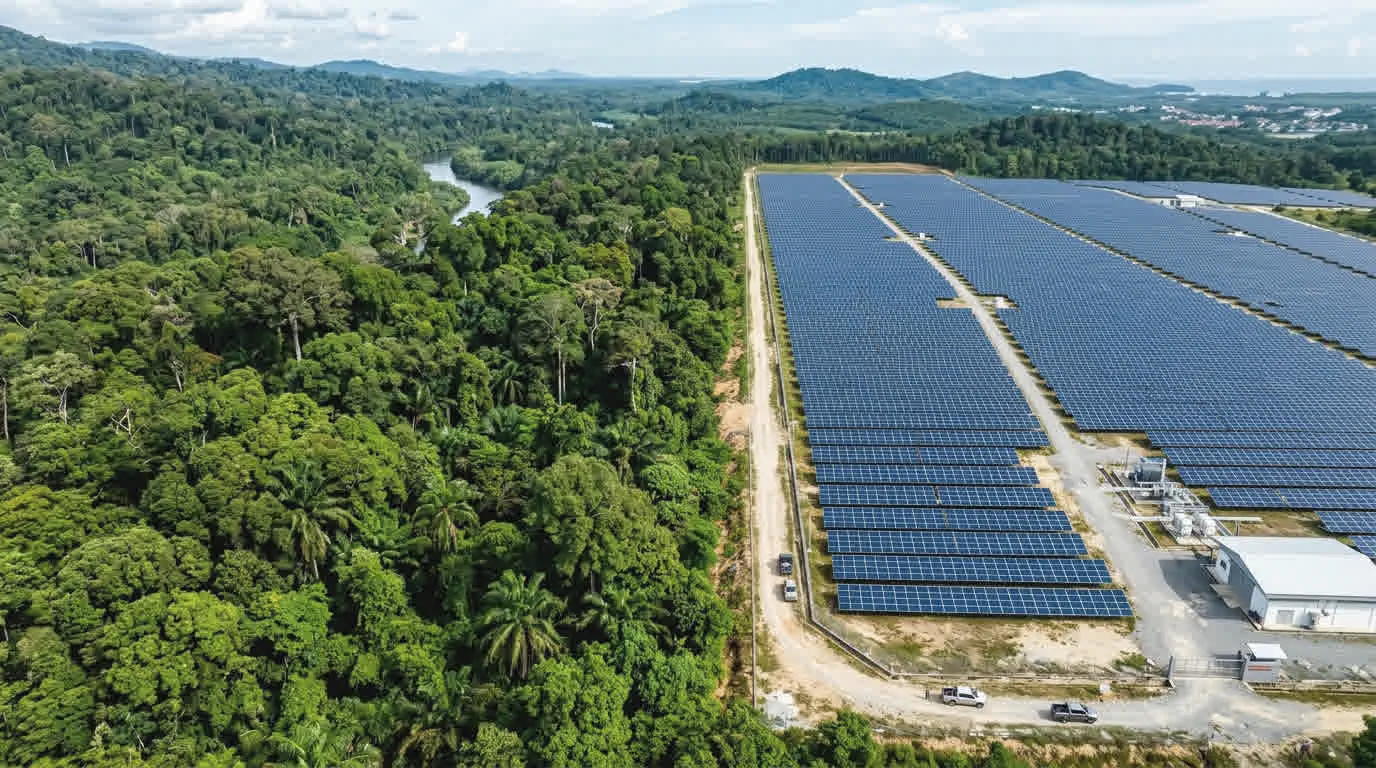
  • Zero land disturbance from 2,000+ rooftop installations
  • Tier-1 panel sourcing with full supply chain traceability
  • Malaysia’s first structured PV panel recycling programme
  • Zero liquid discharge construction practices on all sites
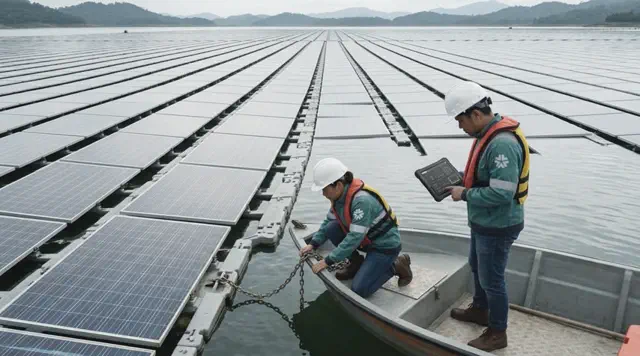
  • Biodiversity impact assessments on floating solar projects
  • Water quality monitoring at aquatic installation sites
groups

Social (S)

  • 500+ people employed across the group
  • 1,000 green jobs committed by 2028 (engineers, technicians, PMs)
  • Supply chain localisation — 60%+ components sourced regionally
  • Annual solar literacy workshops for schools & universities
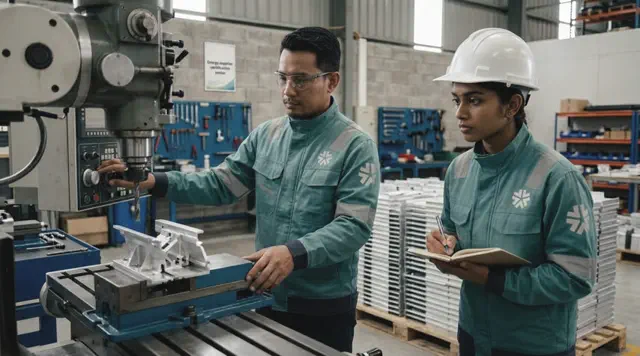
  • Graduate engineering programme (12-month structured intake)
  • Affordable solar financing for underserved B40 communities
  • Full SOCSO, EPF, and HRDF compliance across all operations
account_balance

Governance (G)

  • Triple ISO certified: 9001, 14001, 45001
  • TCFD-aligned climate risk disclosure (4-pillar framework)
  • Transparent financial reporting with third-party audits
  • Zero LTI record across 2,000+ project installations
  • Anti-corruption & whistleblower policies (MACC-aligned)
  • Board-level ESG oversight with quarterly review cadence
  • Annual sustainability report with quantified KPIs
Impact Calculator

What does your solar actually offset?

Malaysia’s Peninsular grid emission factor is 0.74 kg CO₂ per kWh (Energy Commission, 2024 provisional). Every unit of solar generation directly displaces that. This calculator converts your system size or annual generation into the metrics sustainability reports, board ESG updates, and stakeholder presentations actually use: CO₂ tonnes, tree equivalents, and cars off the road.

Carbon Impact Calculator
Interactive Calculator
01
Step One

Enter your system size or annual generation.

Choose the input mode that matches your data. If you only know the system size, leave the toggle on kWp. If you have actual meter data from your inverter, switch to MWh for a more precise result.


100 kWp
1 kWp5,000 kWp
02
Step Two

Your impact, year on year and across 25.

Annual figures sit at the top, lifetime cumulative numbers at the bottom. The lifetime view is what board ESG commitments and science-based target reports cite.

cloud_off
—
tCO₂ / year
Grid factor 0.74 tCO₂/MWh (Peninsular, 2024 prov.)
park
—
trees equivalent
0.060 tCO₂ absorbed per tree/year (EPA)
directions_car
—
cars off the road
4.29 t CO₂e per car/year (EPA)
25-year cumulative impact
—
tonnes CO₂
—
trees equivalent
—
MWh generated

Illustrative estimate only, based on the stated assumptions and current published tariffs/incentives. Not a quotation or financial, tax or investment advice. Actual results depend on a site survey.

03
Step Three

How others use this.

Two short walkthroughs from sustainability and ESG teams that turn this calculator into a board-ready figure.

Scenario 01

“I need the numbers for our annual sustainability report.”

Enter your system size in kWp. The annual results give you CO₂ offset in tonnes, tree equivalents, and cars removed from the road, all with the methodology footnotes your ESG auditor will ask for (Peninsular grid factor 0.74 tCO₂/MWh, yield 1,250 kWh/kWp/yr, EPA tree basis 0.060 tCO₂/yr).

Example: 500 kWp → 462.5 tCO₂/yr → 7,708 trees/yr → 108 cars

Scenario 02

“We have a net-zero commitment. How much does our solar actually contribute?”

Switch to the 25-year lifetime view. This is the number for science-based target reporting and board-level ESG commitments. If you have actual meter data, switch the toggle to Annual Generation (MWh) and enter the figure from your inverter monitoring system for a more precise result than using system size alone.

Example: 1 MWp → about 21,800 tCO₂ over 25 years (with 0.5%/yr degradation) → equivalent to about 5,100 cars off the road for a year

Our Environmental Impact

Cumulative environmental impact of ERS Energy’s 2 GWp+ installed portfolio across the Asia-Pacific (company profile). The CO₂ figure is the company’s reported regional total; equivalents use US EPA factors (4.29 t per car and 0.060 t per tree per year).

~1.85M

Tonnes of CO₂ avoided per year across our regional portfolio (company profile) — equivalent to about 430,000 cars off the road every year (EPA 4.29 t per car).

2 GWp+

Installed capacity across the Asia-Pacific.

~31M

Trees equivalent per year: ~1.85 million tonnes of CO₂ avoided per year equals the annual absorption of about 31 million urban trees (EPA basis, 0.060 tCO₂ per tree per year).

2,000+

Projects delivered by ERS Energy across the region over 17 years.

Certifications
ISO 9001:2015

Quality Management. Audited processes for consistent delivery, customer satisfaction, and continual improvement on every install.

ISO 14001:2018

Environmental Management. Measured footprint across site planning, waste handling, and full system lifecycle impact.

ISO 45001:2018

Occupational Health & Safety. Certified safety practices on every rooftop, protecting our installers and your household.

UN Sustainable Development Goals Alignment

ERS Energy’s operations directly contribute to four of the United Nations’ 17 Sustainable Development Goals — with measurable, quantified impact against each.

7
Affordable & Clean Energy

2 GWp+ deployed across rooftop, ground-mount, and floating solar, generating 1.4B+ kWh of clean electricity per year. BESS integration enables 24-hour clean energy supply. Solar ATAP participation makes clean energy accessible to residential customers at RM 0 upfront under PPA models.

1.4B+ kWh clean electricity/year
8
Decent Work & Economic Growth

500+ people across engineering, project management, and operations. Supply chain localisation programme sources 60%+ of components regionally, supporting hundreds of Malaysian SMEs. Graduate engineering programme provides structured 12-month pathways into clean energy careers.

1,000+ green jobs target by 2028
9
Industry, Innovation & Infrastructure

Deploying BESS from 100 kWh to 100+ MWh scale, smart grid integration with SCADA monitoring, and AI-driven predictive maintenance. Pioneering floating solar installations with real-time environmental monitoring, contributing to Malaysia’s position as ASEAN’s emerging clean energy infrastructure leader.

BESS + smart grid + floating solar
13
Climate Action

~1.85 million tonnes CO₂ avoided annually (regional portfolio), directly supporting Malaysia’s NDC commitment of 45% emissions intensity reduction (against 2005 baseline) by 2030.

~1.85M tonnes CO₂ avoided per year

Malaysia’s Energy Transition & Global Context

ERS Energy operates at the intersection of Malaysia’s national policy goals, ASEAN clean energy targets, and the Paris Agreement’s global climate commitments. Solar is no longer alternative energy — it’s the centrepiece of the transition.

40%

Malaysia RE Target by 2035

Under NETR, Malaysia targets 40% renewable energy in its installed capacity by 2035 (31% was reported as achieved at the end of 2025). Reaching it means adding substantial new renewable capacity, with solar a major contributor.

70%

Long-Term RE Target by 2050

Malaysia’s 2050 aspiration under NETR is 70% renewable installed capacity. Solar is expected to be a major contributor, supported by BESS for grid stability. NETR estimates investment opportunities of RM 435 billion to RM 1.85 trillion by 2050 (Ministry of Economy).

45%

NDC Emissions Intensity Cut

Malaysia’s Nationally Determined Contribution under the Paris Agreement: 45% reduction in emissions intensity of GDP by 2030, against 2005 baseline. Unconditional commitment to the international community.

public

National Policy Landscape

  • NETR (Malaysia)Investment opportunities of RM 435 billion to RM 1.85 trillion by 2050
  • Solar ATAP 2026 (Malaysia)Subsidised residential rooftop solar with uncapped quota, 10-year contracts, and 1:1 Energy Charge offset on grid exports
  • GITA (Malaysia)60% allowance on qualifying solar CAPEX and 100% for BESS (via MGTC), for CAPEX incurred by 31 Dec 2026
  • Carbon pricing (Malaysia)Domestic carbon pricing under development; timeline to be confirmed
  • LSS Programme (Malaysia)Large Scale Solar competitive bidding for utility-scale projects
  • MIDA incentives (Malaysia)Other green-technology incentives may be available; consult MIDA and your tax adviser
language

Global Climate Commitments

  • Paris AgreementLimit warming to 1.5°C; 196 signatory nations
  • ASEAN targets23% RE in primary energy by 2025, 35% by 2030
  • IEARenewables are expected to overtake coal as the largest source of electricity around 2025–26; solar PV to overtake hydropower by 2029
  • IRENAGlobal weighted-average LCOE of utility-scale solar PV was USD 0.043/kWh in 2024
  • BloombergNEFUSD 1.8T invested globally in energy transition (2024)
  • Global capacityAbout 2.2 TW of solar PV installed worldwide at end-2024 (IEA-PVPS)
  • Cost trajectorySolar module prices below USD 0.10/W; system costs continue declining 5–8%/yr

TCFD-Aligned Climate Disclosure

Aligned with the Task Force on Climate-related Financial Disclosures (TCFD) framework — now required or recommended by Bursa Malaysia, Bank Negara, and major institutional investors globally.

shield
Governance
  • Board-level ESG oversight committee reviews sustainability KPIs quarterly
  • CEO and CFO jointly accountable for climate-related targets and disclosures
  • Climate risk integrated into enterprise risk management (ERM) alongside operational and financial risk
  • Sustainability-linked KPIs embedded in executive compensation structure
strategy
Strategy
  • Core business is inherently climate-positive: every MW deployed reduces grid emissions
  • Scenario analysis under IEA NZE, APS, and STEPS pathways — operations resilient under all three
  • Transition opportunity: Malaysia’s carbon pricing roadmap and NETR create structural demand growth
  • BESS integration positions ERS for grid balancing and ancillary services revenue as RE share grows
monitoring
Risk Management
  • Physical: IEC 61215/61730 compliant panels rated for extreme wind, humidity, and temperature cycling
  • Transition: Diversified across 6 countries; policy changes monitored via quarterly regulatory review
  • Supply chain: Multi-vendor sourcing — JA Solar, Canadian Solar, Huawei, Sungrow, BYD — no single-supplier dependency
  • Technology: 25-year warranty coverage on panels; inverter replacement reserves budgeted from year 1
analytics
Metrics & Targets
  • Scope 4: ~1.85 million tonnes CO₂ avoided annually from clean energy generation
  • Capacity: Growing beyond 2 GWp+ across six Asia-Pacific markets
  • Operations: Carbon neutral operations by 2050; interim 50% Scope 1+2 reduction by 2035
  • Social: 1,000 green jobs by 2028; Zero LTI safety record maintained

Emissions Scope Overview

ERS Energy’s direct emissions (Scope 1+2) are minimal relative to our avoided emissions impact.

Scope 1
~250 t
Vehicle fleet, diesel generators, refrigerants
Scope 2
~480 t
Office electricity, warehouse facilities
Scope 3
~2,800 t
Supply chain, logistics, panel embodied carbon
Scope 4 (Avoided)
~1.85M t
Clean energy displacing fossil fuel generation

Supply Chain Sustainability

Responsible sourcing, end-of-life management, and environmental stewardship across our entire supply chain — from raw material traceability to decommissioning.

verified

Responsible Sourcing

Tier-1 Bloomberg-ranked manufacturers only — JA Solar, Canadian Solar, Huawei, Sungrow, BYD. All panels meet IEC 61215/61730 and carry 25-year performance warranties. Supply chain traceability for polysilicon origins, conflict-free mineral verification, and compliance with US/EU import requirements.

recycling

Panel Recycling Programme

Developing Malaysia’s first structured PV end-of-life recycling programme. Modern recycling processes recover up to 95% of panel materials — silicon wafers, tempered glass, aluminium frames, copper wiring, and junction box components. With 2 GWp+ installed, responsible decommissioning planning starts from day one.

nature

Environmental Monitoring

Biodiversity impact assessments on floating solar projects include water quality monitoring, aquatic ecosystem surveys, and shading impact studies. Habitat preservation protocols for sensitive wetland and reservoir sites. Zero-discharge construction practices prevent contamination during installation.

Our Sustainability Commitments

Specific, measurable, time-bound commitments ERS Energy is making for the next decade — tracked against progress milestones and reported annually.

flag

Growing beyond 2 GWp+

Expanding across our six Asia-Pacific markets and supporting Malaysia’s NETR target of 40% renewable energy installed capacity by 2035.

recycling

Panel Recycling Programme

Malaysia’s first structured PV end-of-life recycling programme, targeting operational readiness by 2027. First wave of panels from our earliest installations approach mid-life in the 2030s. Up to 95% material recovery rate for silicon, glass, aluminium, and copper. Partnership model with regional recycling facilities.

groups

1,000 Green Jobs by 2028

From 500+ current positions to 1,000+ by 2028 — engineers, solar technicians, project managers, and O&M professionals. Graduate engineering programme takes 50+ new entrants per year. Supply chain localisation programme creates additional indirect employment across Malaysian SME partners.

school

Solar Literacy Initiative

Annual solar education workshops for schools, universities, and community groups across Malaysia. Target: 5,000+ participants per year by 2028. Building the human capital pipeline Malaysia needs — IRENA estimates the country needs 45,000 RE workers by 2030 to meet NETR targets.

Certifications & Compliance

ERS Energy operates to the highest international standards across all project activities.

workspace_premium

ISO 9001:2015

Quality Management System certification for all project delivery processes and operations.

eco

ISO 14001:2015

Environmental Management System ensuring sustainable practices across all operations and project sites.

health_and_safety

ISO 45001:2018

Occupational Health & Safety Management System. Zero LTI record on major utility-scale projects.

electrical_services

SEDA Registration

Registered contractor and project developer with Malaysia’s Sustainable Energy Development Authority (SEDA).

verified

IEC Standards

All installations comply with relevant IEC standards for PV systems, energy storage, and grid interconnection.

gavel

Malaysian Grid Code

Full compliance with TNB Grid Code and Distribution Code for all grid-connected installations.

solar_power

Solar ATAP Registered

Authorised installer and system registrar for Malaysia’s Solar ATAP programme (January 2026).

17 Years of Proven Impact

The numbers, partnerships, and recognition behind ERS Energy’s sustainability leadership.

2 GWp+
Clean Capacity Installed
Across rooftop, ground-mount & floating solar
2,000+
Projects Completed
Residential, C&I, and utility-scale
4
Countries
Malaysia, Vietnam, Philippines, Indonesia
Zero
Lost Time Injuries
Across all major project installations
Technology & Manufacturing Partners
JA Solar Canadian Solar Huawei Sungrow BYD Trina Solar LONGi Growatt
emoji_events
4 Major Industry Awards
Recognised for excellence in project delivery, safety, and innovation across the renewable energy sector in Southeast Asia.
verified
Triple ISO Certified
ISO 9001 (Quality), ISO 14001 (Environmental), and ISO 45001 (Safety) — the complete management system trifecta for responsible operations.
handshake
Institutional Investor Confidence
USD 1.7B+ in clean energy investments structured and deployed. Backed by development finance institutions and commercial lenders across the region.
school
SEDA & Solar ATAP Registered
Authorised by Malaysia’s Sustainable Energy Development Authority. Among the first contractors registered for Solar ATAP 2026.

Partner with ERS Energy on the Clean Energy Transition

Whether you’re an investor evaluating ESG opportunities, a corporate sustainability officer exploring solar, or a government stakeholder advancing NETR targets — we’d like to talk.