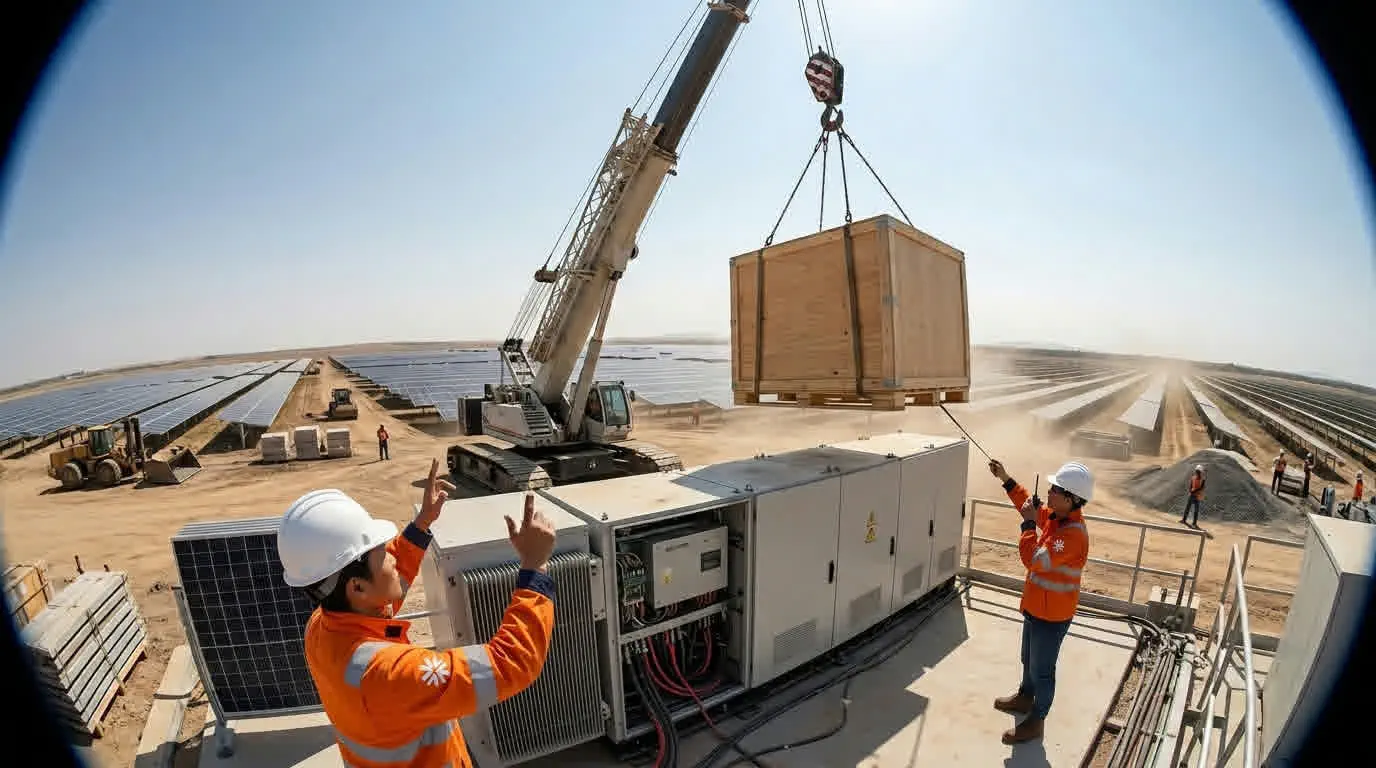
Three proven structures for deploying capital into Malaysia’s renewable energy sector — from fixed-price EPC to co-investment SPVs. Backed by ERS Energy’s record of unlocking over USD 1.7 billion in clean energy investments across the Asia-Pacific, with typically 21-year TNB PPAs, GITA allowances (60% solar, 100% BESS) and indicative equity IRRs of 8.5–12%.

Global energy transition investment hit a record USD 2.3 trillion in 2025 (BloombergNEF). Malaysia’s National Energy Transition Roadmap (NETR) targets 70% renewable installed capacity by 2050, creating a multi-decade pipeline of bankable solar and BESS projects with government-procured offtake.
Record global energy transition investment in 2025, up 8% year-on-year. Renewable energy alone attracted USD 690B.
BloombergNEF, 2025
Malaysia’s installed solar capacity as of end-2025. Since 2016 the LSS programme has approved 121 projects totalling 6,228 MW, with NETR targeting 70% renewable installed capacity by 2050.
IEA-PVPS & Energy Commission, 2025
Indicative equity IRR range for Malaysian LSS projects with a long-tenor TNB PPA. Competitive with traditional infrastructure at lower volatility.
ERS Energy indicative range
Each structure offers a different balance of risk, return, and control. Choose based on your investment mandate, operational appetite, and target returns.
ERS Energy designs, procures, and constructs the asset under a fixed-price EPC contract. You own the plant outright from COD with performance guarantees, optional 25-year O&M, and eligibility for the GITA capital allowance (60% for solar, 100% for BESS) on qualifying CAPEX.
ERS Energy co-invests 15–25% equity alongside you and takes full O&M responsibility for the asset life. Aligned incentives through skin-in-the-game — our returns depend on the same energy yield as yours.
Dedicated project SPV holds all assets, contracts, and permits. Non-recourse debt (typically 70–80% LTV) from Malaysian development banks or international DFIs. Ideal for infrastructure funds and institutional mandates requiring ring-fenced exposure.
Indicative transaction examples based on typical ERS Energy project parameters. Actual terms depend on project specifics, location, and market conditions.
* All figures are indicative for discussion purposes and subject to project-specific due diligence, market conditions, and final negotiation. Equity IRRs shown are indicative ranges for LSS projects (8.5–12%).
Key trade-offs across the three investment structures at a glance.
| Criteria | EPC Turn-Key | O&M + Equity Partnership | SPV Co-Investment |
|---|---|---|---|
| Equity Required | 20–30% of CAPEX | 15–25% (co-invest with ERS) | 20–25% of CAPEX |
| Indicative Equity IRR (LSS) | 8.5–12% | 8.5–12% | 8.5–12% |
| Control Level | Full ownership & control | Shared (board representation) | SPV governance structure |
| Risk Profile | Lower — fixed-price contract | Moderate — shared risk | Higher — project-level risk |
| Operational Involvement | Self-manage or outsource O&M | ERS handles all O&M | ERS as contracted O&M |
| Typical Project Size | 10–50 MWp | 30–100 MWp | 50–200+ MWp |
| Construction Timeline | 12–18 months | 12–18 months | 15–24 months |
| Exit Options | Asset sale, refinancing | Secondary sale, portfolio aggregation | Secondary sale, refinance, IPO pathway |
| Best Suited For | Corporates, developers with O&M capability | Investors seeking a technical partner | Infrastructure funds, institutional capital |
Explore which investment structure matches your capital deployment preferences and risk profile. Enter your project parameters below to see a personalised comparison with projected returns.
Illustrative estimate only, based on the stated assumptions. Not a quotation or financial, tax or investment advice.
Solar infrastructure assets offer multiple exit pathways. The growing secondary market for operational renewable assets provides increasing liquidity options.
What lenders and investors look for when evaluating renewable energy projects. ERS Energy structures every project to meet these requirements from day one.
A structured 5-step process from initial conversation to Notice to Proceed. Typical timeline: 3–6 months from first contact to financial close.
Introductory call with our Business Development team. Mutual NDA executed. You share your investment mandate, target returns, and risk parameters. We assess fit with our active project pipeline.
We present projects matching your mandate from our active project pipeline across utility-scale solar and BESS. Indicative term sheet and preliminary financial model issued for shortlisted projects.
Full virtual data room access: independent energy yield assessment, geotechnical reports, grid impact study, environmental clearance, detailed financial model, draft EPC and O&M terms, and TNB PPA. Independent engineer and legal advisors engaged.
Binding term sheet signed. Legal counsel drafts: shareholders’ agreement (SHA), EPC contract, O&M agreement, project finance facility agreement, security documents, and insurance programme.
All conditions precedent satisfied: regulatory approvals, insurance placement, security perfection, and equity drawdown. Financial close achieved. ERS Energy issues Notice to Proceed (NTP) and construction mobilisation begins within 2 weeks.
Our structures are designed for institutional-scale capital deployment. EPC Turn-Key projects typically start at around 10 MWp. Equity partnerships and SPV co-investments generally require a minimum equity commitment of RM 20M. For smaller commitments, we can discuss portfolio participation or fund-level structures.
TNB power purchase agreements for LSS projects are typically 21-year contracts with fixed tariff rates determined through competitive bidding under the LSS PETRA programme administered by the Energy Commission. In the latest round (LSS PETRA 5+), awarded tariffs averaged RM 0.152/kWh, or about 15 sen/kWh. Revenue is based on actual energy delivered to the grid, metered at the point of interconnection. TNB is Malaysia’s national electricity utility, providing strong credit quality for project finance. Curtailment risk is typically limited for LSS projects with confirmed grid connection agreements, subject to the terms of the PPA.
Malaysia offers strong fiscal incentives for renewable energy. The Green Investment Tax Allowance (GITA) for own-consumption assets is administered by MGTC and provides a 60% allowance on qualifying solar (Tier 2) and 100% on battery energy storage (Tier 1), offsetting up to 70% of statutory income, with unutilised allowances carried forward. Qualifying capital expenditure must be incurred by 31 December 2026 — check MGTC for any extension. Assets must be approved by the Ministry of Finance, verified by MGTC, and listed in the MyHIJAU Directory. Other incentives, such as import duty exemptions or pioneer status, may be available for qualifying projects — please seek tax advice. ERS Energy assists with the application process as part of project structuring.
Key risks include construction delay, equipment performance, irradiance variability, and regulatory change. Construction risk is mitigated through fixed-price EPC contracts with liquidated damages for delay (typically 0.5% of EPC value per week, capped at 10–15%). Equipment performance is covered by manufacturer warranties — 25-year linear power output warranty on panels (typical Tier-1 degradation of about 0.5%/yr), 10-year inverter warranty (extendable to 20), and ERS performance ratio guarantees. Irradiance risk is managed through independent energy yield assessments (by firms like DNV or Fichtner) and conservative P75/P90 financial modelling for debt sizing. Regulatory risk is low: Malaysia’s NETR targets 70% renewable installed capacity by 2050, and the LSS programme has operated consistently since 2016. Currency risk is minimal as both revenues (TNB PPA in RM) and costs are denominated in Ringgit.
Yes. Foreign investors can hold equity in Malaysian solar SPVs, subject to standard MIDA and Energy Commission approvals. Foreign ownership requirements depend on the project structure and licensing. ERS Energy has structured transactions with investors from Singapore, Japan, South Korea, and the Middle East, and can guide you through the regulatory process.
Post-COD, ERS Energy can serve as the long-term O&M contractor under a formal agreement (typically 25 years). This includes preventive and corrective maintenance, 24/7 remote monitoring, performance reporting, vegetation management, and equipment warranty administration. In equity partnership structures, ERS also participates in SPV governance through board representation.
Our Investor Relations team is ready to discuss live project opportunities across our active project pipeline. NDA-ready virtual data room, preliminary financial models, and indicative term sheets available for qualified investors.