01
Step One
Size your BESS.
Slide the system power, then pick the duration. The two together set capacity in MWh, which drives every revenue stream below.
 Utility-Scale Solar & BESS EPCC
Solar farms and grid-scale battery storage (BESS) for the megawatt scale. Malaysia’s pioneer Large Scale Solar (LSS) programme contractor, with two of the four shortlisted MyBeST BESS bids. 1.9 GWp+ of utility-scale EPCC capacity delivered across solar farms and long-duration BESS.
Government policy, falling costs, and energy security imperatives are creating the largest utility-scale solar pipeline in Malaysia’s history. Over RM 21 billion in LSS investment approved and growing.
LSS PETRA 5+ awarded 1,975 MW across 13 projects (average RM 0.152/kWh). MyBeST BESS programme: 400 MW / 1,600 MWh across 4 shortlisted bids. GITA offers a 60% allowance on qualifying solar CAPEX and 100% for BESS (via MGTC).
Policy information as of September 2026. Tariff rates and programme terms are set by the government and may be revised.
Solar is among the lowest-cost sources of new electricity generation. Stationary battery pack prices fell to about USD 70/kWh in 2025 (BNEF), though full turnkey systems cost more (see the calculator below).
Source: BNEF 2025, IRENA 2024. Actual project costs vary by site conditions, technology choice, and procurement terms.
Malaysia’s NETR roadmap targets growth in renewable capacity through 2050, with solar a major contributor.
Targets per National Energy Transition Roadmap (NETR). Actual deployment pace subject to policy, grid capacity, and market conditions.
Utility-scale solar and utility-scale BESS EPCC, delivered independently or as integrated solar-plus-storage hybrid systems for dispatchable clean energy.
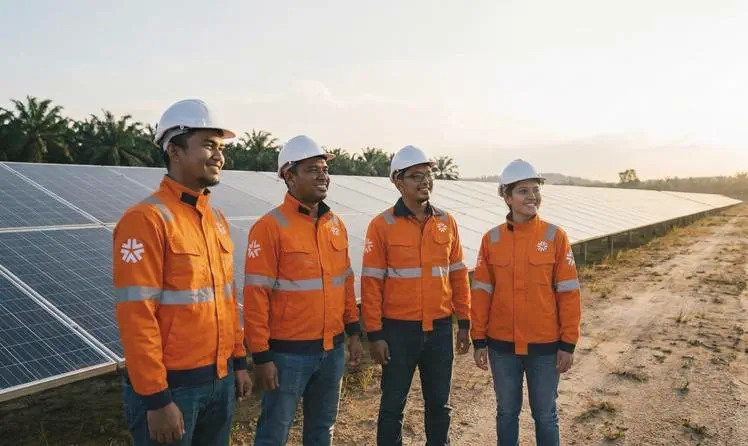
From 5 MW to 200+ MW across ground-mount, floating, tracker, and agrivoltaic configurations. ERS Energy has delivered under the LSS programme (LSS1 through PETRA 5+), CGPP, and corporate PPA structures. Tier-1 components: JA Solar and Canadian Solar modules (22%+ efficiency), Huawei and Sungrow inverters (98.5%+ conversion).
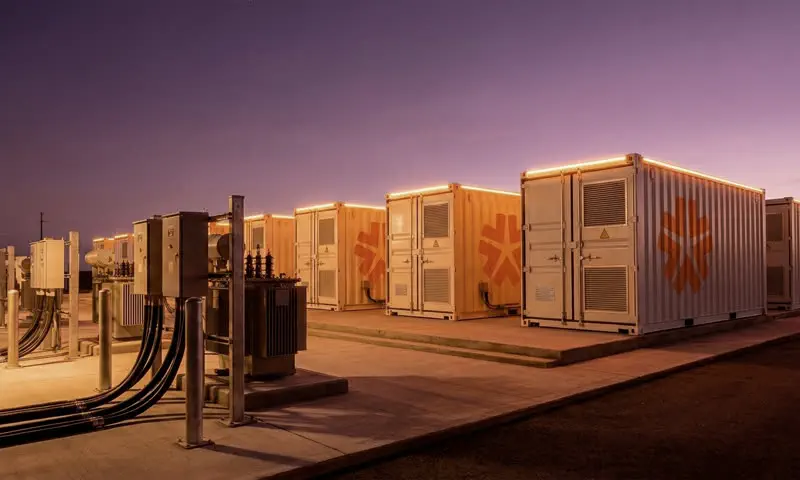
ERS Energy appears in 2 of the 4 bids shortlisted by the Energy Commission for the MyBeST utility-scale BESS programme in December 2025. Each project: 100 MW / 400 MWh, providing energy shifting and peak demand management. Targeted commissioning 2027.
We don’t just build — we shepherd your project through every stage. One team, one contract, one point of accountability from feasibility study to year 25 of operations. No handoffs, no finger-pointing, no gaps.
Land acquisition and lease negotiation (typically 25+ year terms). Environmental Impact Assessment (EIA) and social impact studies. Grid connection study with TNB — evaluating 33 kV, 132 kV, or 275 kV interconnection options.
Permitting through SEDA, Energy Commission, DOE, and local authorities. Preliminary system design, yield simulation (PVsyst), and project financial modelling including the GITA tax allowance (60% of qualifying solar CAPEX; 100% for BESS; via MGTC, for CAPEX incurred by 31 Dec 2026).
PPA negotiation and execution (typically 21 years for LSS). Project finance structuring with commercial banks, DFIs, or infrastructure funds — typical debt-equity 70:30 to 80:20.
Comprehensive insurance coverage: construction all-risks (CAR), business interruption, third-party liability. EPC contract with performance guarantees, liquidated damages, and defect liability periods. Independent engineer (IE) review for lender due diligence.
Procurement of BNEF Tier-1 modules (JA Solar, Canadian Solar — 22%+ cell efficiency), string or central inverters (Huawei, Sungrow — 98.5%+ conversion), and balance-of-system components. Civil works: land clearing, access roads, piling (driven or screw), and mounting structures.
Electrical: DC string wiring, AC collection cables, step-up transformers, switchgear, and protection systems. Grid interconnection: TNB coordination, relay testing, and synchronisation. Performance testing: PR verification, I-V curve testing, thermography, and COD certification.
24/7 SCADA-integrated monitoring from ERS Energy’s Network Operations Centre. Preventive maintenance: scheduled panel cleaning, inverter servicing, vegetation management, and tracker lubrication. Corrective maintenance: fault diagnostics, component replacement, and warranty claims management.
Performance optimisation: degradation tracking (typical 0.5%/year for Tier-1 modules), soiling analysis, and re-stringing. Quarterly reporting to investors and lenders. Lifecycle asset management including insurance renewal, refinancing support, and end-of-life planning.
Two complementary platforms, each with distinct value propositions. Deploy independently or combine for dispatchable clean energy.
Solar LCOE of USD 0.043/kWh (IRENA, 2024 global weighted average) — among the lowest-cost sources of new electricity generation.
Typically 21-year PPAs with TNB or investment-grade corporates for predictable cash flows.
Millisecond-scale response (<200 ms) helps a BESS support grid stability where a grid service is contracted.
Discharge during peak demand to displace expensive peaking plants and defer grid infrastructure.
Each MWp avoids about 925 tonnes CO₂/year (1,250 MWh × 0.74 t/MWh). RECs and carbon credits may provide additional revenue.
25-year warranties, predictable degradation (0.5%/year). Institutional lenders actively seek exposure.
Store midday solar output for evening delivery, making solar output more dispatchable.
Support the grid where contracted, under programme terms such as MyBeST.
This estimator shows the illustrative annual energy value of one daily charge-discharge cycle for a grid-scale BESS, net of operating cost, next to a reference capex. Utility BESS in Malaysia is procured through contracted programmes (e.g. MyBeST); returns depend on contract terms, so no payback is shown. Duration sets the capacity in MWh.
Slide the system power, then pick the duration. The two together set capacity in MWh, which drives every revenue stream below.
The bar shows the annual value of shifting energy through one cycle a day. The totals show the value net of operating cost and a reference capex; no payback or capacity payment is shown.
System capacity: 200 MWh · 95% availability · 88% round-trip efficiency (LFP)
Illustrative estimate only, based on the stated assumptions and current published tariffs/incentives. Not a quotation or financial, tax or investment advice. Actual results depend on a site survey.
Two short walkthroughs from project developers and IPPs evaluating BESS investments.
“We need to size a BESS to pair with our LSS project.”
Set system power to 20 MW and duration to 4 hours, a common pairing for a 50 MW solar farm. The estimator shows the 80 MWh capacity earning an illustrative energy value, with the reference capex alongside.
Result: 20 MW / 4-hour, illustrative annual energy value RM 3.2M gross (RM 2.6M net of opex), reference capex RM 38.2M
“We’re evaluating a standalone grid services contract.”
Set system power to 10 MW and duration to 2 hours. This is a quarter of the 80 MWh capacity above, so both the energy value and the reference capex fall in proportion.
Result: 10 MW / 2-hour, illustrative annual energy value RM 0.8M gross (RM 0.7M net of opex), reference capex RM 9.5M
Delivering 200+ MW installations demands deep engineering capability — from high-voltage grid interconnection to real-time monitoring across every site. Built on 17 years and 1.9 GWp of hands-on project delivery.
In-house PE-qualified team for 33 kV to 275 kV grid connections. TNB Grid Code compliance including power factor, harmonic, and fault ride-through requirements. Deep relationships with TNB Grid System Operations and Energy Commission for connection approvals.
IEC 61215/61730, IEC 62548, and Malaysian grid code compliance. PE-stamped designs for all utility-scale installations.
ISO 9001:2015, ISO 14001:2015, and ISO 45001:2018 certified project management. Zero LTI record on major projects.
Tier-1 partnerships: JA Solar and Canadian Solar (modules), Huawei and Sungrow (inverters), BYD (BESS cells). Long-term supply agreements provide procurement cost advantage, priority allocation during supply constraints, and lead-time certainty for large-scale projects.
Integrated SCADA monitoring across all sites. Real-time performance dashboards. Predictive maintenance protocols. Automated alerts and fault diagnostics.
Network Operations Centre with round-the-clock monitoring. Real-time alerts, performance reporting, and optimisation across every site in the portfolio.
ERS Energy operates as the sole counterparty across the full project lifecycle — development, EPC, operations, and asset management under one contract. Project leadership is assigned at feasibility and retained through to COD and long-term O&M, eliminating interface risk between project phases.
Turnkey EPC with performance guarantees. Long-term O&M (5–25 years) and asset management.
50+ acre sites with grid proximity. Long-term lease income (25+ years), no capital outlay.
EPC-only, Development + EPC, or full-wrap with O&M. 1.9 GWp track record for lender confidence.
Typically a 21-year tenure with TNB or investment-grade corporates. Defined tariff escalation and curtailment protections.
1.9 GWp across 121+ projects, pioneer LSS status, triple-ISO certification.
CAR, property all-risks, business interruption, third-party liability. Zero LTI record.
1.9 GWp delivered. 2 of 4 MyBeST BESS bids shortlisted. Triple-ISO certified. Our utility-scale team works with IPPs, utilities, and project developers across Malaysia and the region. Let’s discuss your next large-scale project.
ERS Energy delivers utility-scale solar from 10 MW to 500+ MW per site, including ground-mount, floating solar, and hybrid solar+BESS. Our largest single solar EPCC is the 155 MWp LSS3 Pekan project, and we were shortlisted in 2 of 4 Energy Commission utility-scale BESS bids (MyBeST).
LSS (Large Scale Solar) is Malaysia's utility-scale procurement programme run by SEDA. LSS5 is the current round, with LSS6 expected to open in 2026. ERS Energy has delivered projects under LSS1 through LSS5 across Peninsular Malaysia, with capacities ranging from 10 MW to 100 MW per site.
A typical 50 to 100 MW LSS project takes 18 to 24 months from financial close to commercial operation date (COD). Site preparation: 3 to 6 months. Module delivery and installation: 6 to 9 months. MV/HV substation and grid interconnection: 4 to 8 months (often the critical path). Testing and commissioning: 2 to 3 months.
Grid-scale battery storage from 5 MWh to 500+ MWh, lithium iron phosphate (LFP) and emerging long-duration chemistries. Use cases: peak shaving, energy shifting (arbitrage), firm capacity and grid-support services under contracted programmes such as the Energy Commission's MyBeST. Integration with solar for hybrid renewable + storage plants. Partnership with Tier-1 BESS suppliers including BYD and Sungrow.
Project finance for utility-scale solar in Malaysia comes from local commercial banks (CIMB, Maybank, Public Bank, RHB), green bond markets, and equity partners. ERS structures projects as IPP (Independent Power Producer) special purpose vehicles with 70/30 to 80/20 debt/equity gearing. Bankability requires offtake agreement, bankable EPCC contract, and proven sponsor track record.
Yes. ERS currently operates 397 MWp under active O&M in Malaysia, including utility-scale and large C&I rooftop plants. Services include 24/7 SCADA monitoring, scheduled maintenance, panel cleaning (key in tropical climates), inverter health management, vegetation control, and performance guarantees backed by ERS's engineering team.
In Malaysian and ASEAN trade context, "solar farm" usually means a ground-mount utility-scale solar PV installation (10 MW to 500+ MW). "Solar plant" or "solar power plant" is more formal industry terminology for the same. Both refer to centralised PV generation feeding the transmission or distribution grid via a dedicated substation.
Yes. ERS is actively engaged in early-stage solar+green-hydrogen project scoping in Malaysia and Australia. Solar-powered electrolysis is the lowest-LCOH pathway for green hydrogen production where solar irradiance is high and water is available. Commercial projects expected post-2027 as electrolyser CAPEX falls.