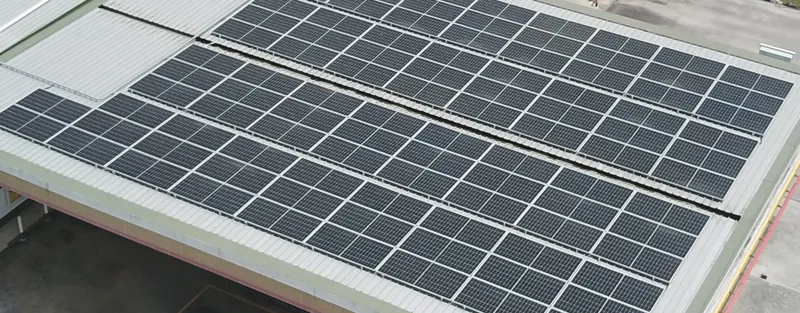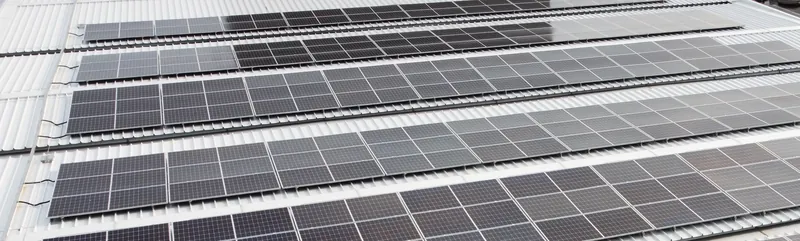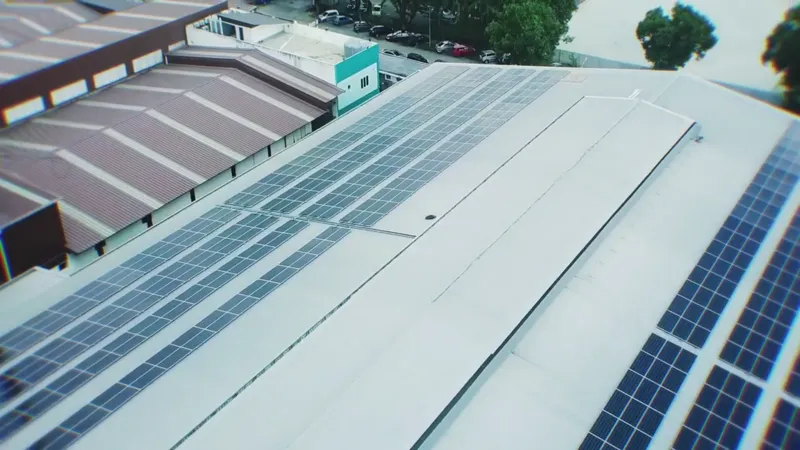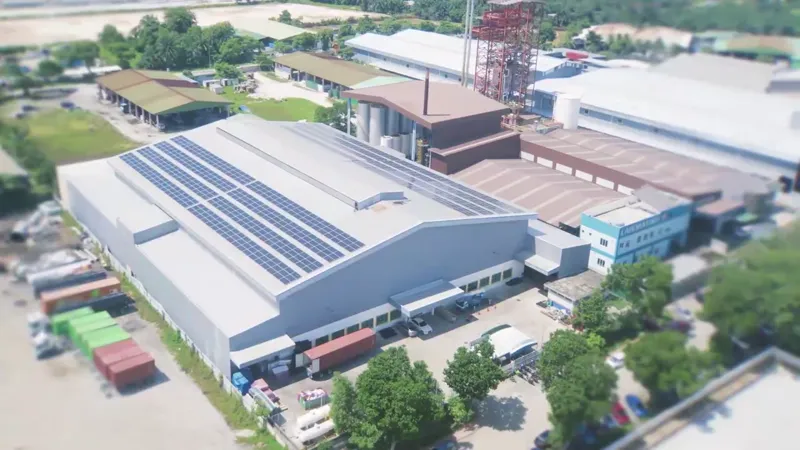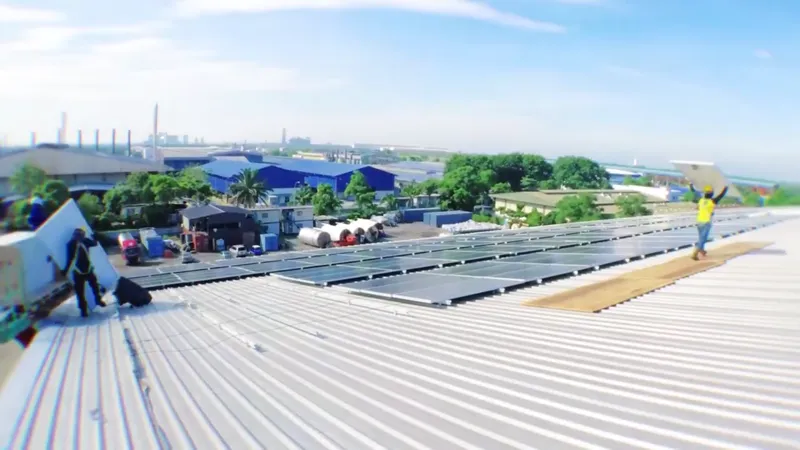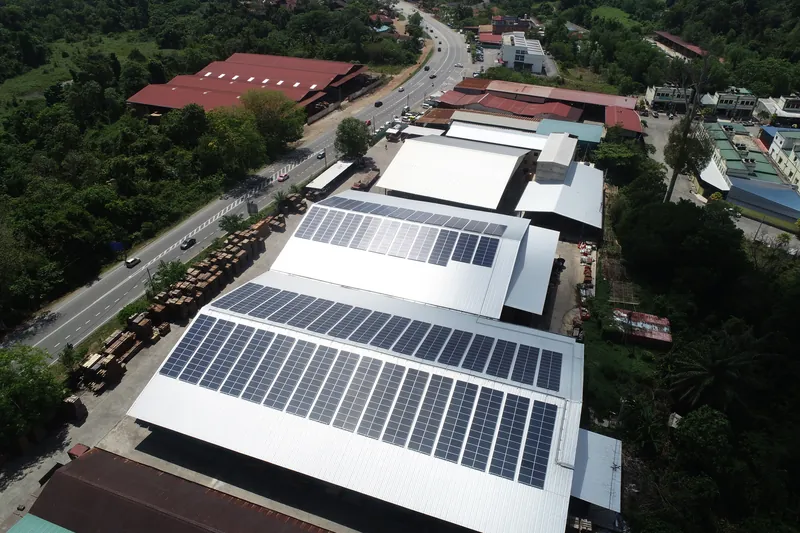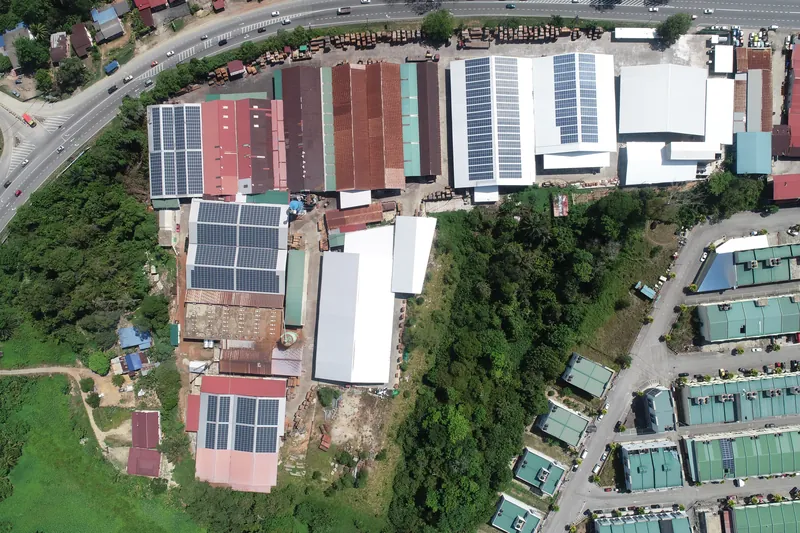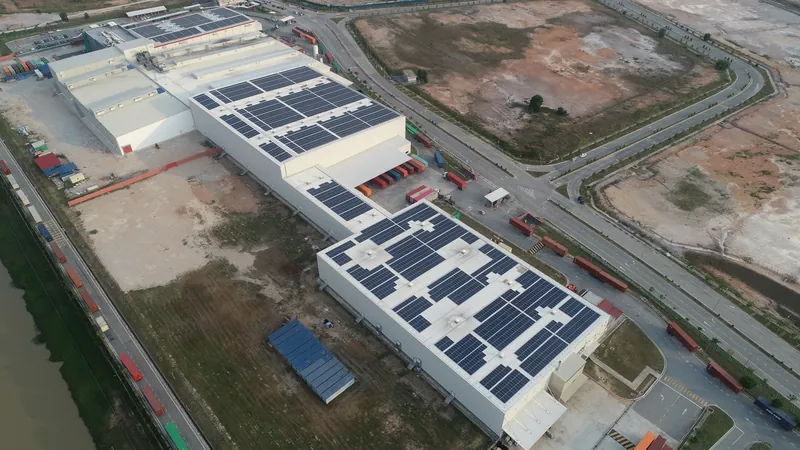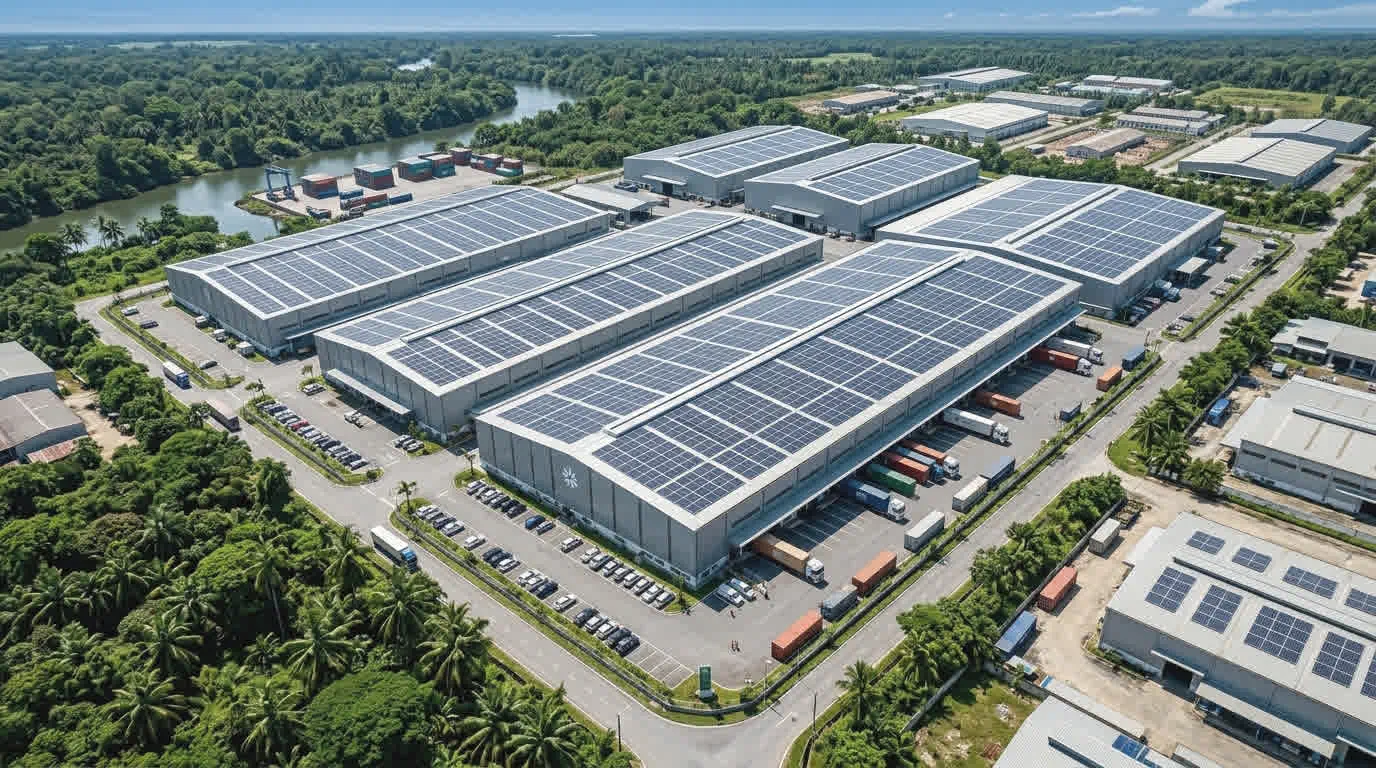
From beverage bottling and food manufacturing to a sawmill and a fuel-station network, ERS Energy’s C&I portfolio is built around engineering each roof for its own conditions. With GITA capital allowances for qualifying CAPEX incurred by 31 Dec 2026 (60% for solar, 100% for BESS, via MGTC), C&I solar has never been more accessible.
Payback and savings figures are estimates for reference only, not a quotation or offer. Actual results depend on the site survey, tariff and usage.
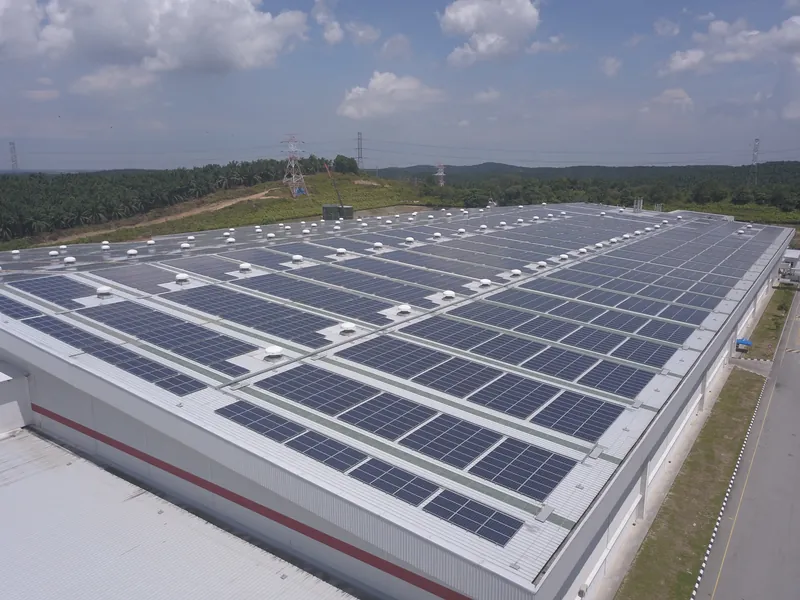
Six real ERS Energy installations, each shown with the engineering challenge it posed and how the EPCC cycle — engineering, procurement, construction, commissioning and O&M — was delivered. Client names are withheld. All systems use Tier-1 equipment from leading panel and inverter manufacturers.
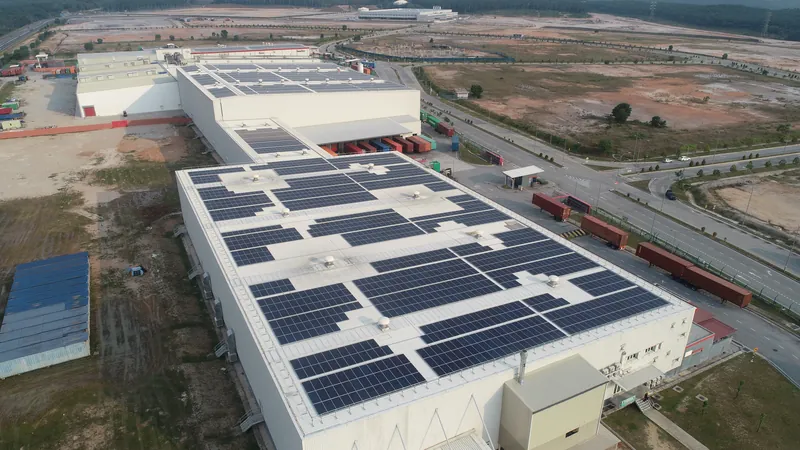
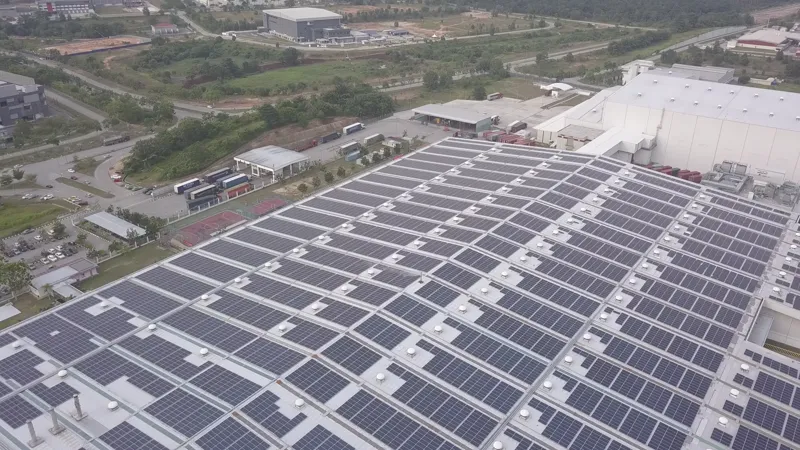
Large low-slope roofs already carry plant services, vents and skylights, so design starts with a structural loading and roof-condition survey, not a module count. Work is sequenced around live bottling lines, with tie-ins made in short shutdown windows, and long DC cable runs across wide roofs shape string design and voltage-drop control.
Every site differs — canopy age, roof sheet profile, tie-in point — yet the owner needs one repeatable design. The team builds a standard kit and design template, then handles site exceptions: canopy loading, hazardous-area clearances on the forecourt, and work at height over operating pumps with customers present. Scheduling and quality control across many small sites is the main risk.
Older factory roofs mix roof types and ages, so each roof zone needs its own structural and waterproofing check before mounting. Inverters and switchgear must fit the existing electrical rooms, and the tie-in has to be made without stopping production.
Sawmill roofs range from freshly re-sheeted to old corrugated sheets, so structural and corrosion checks decide which roofs can carry panels. Wood dust and stored timber make fire risk a design input for cable routing, isolation and inverter placement, and arrays spread over many buildings need several combiner points plus careful earthing and lightning design.
An extensive roof with many penetrations — vents, skylights, HVAC — forces an irregular layout that must still balance strings and keep inverter MPPT inputs matched. Food-hygiene and access rules limit contractor movement, and the added roof load has to be checked against the design reserve.
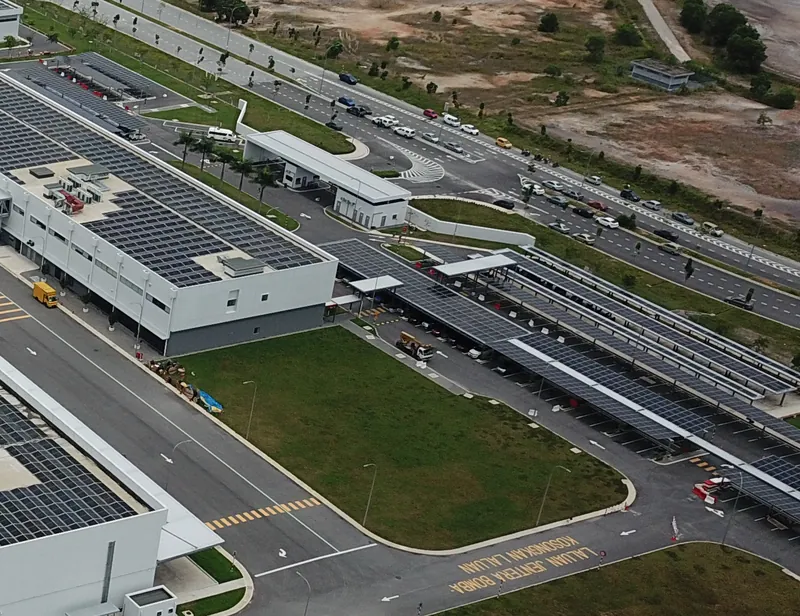
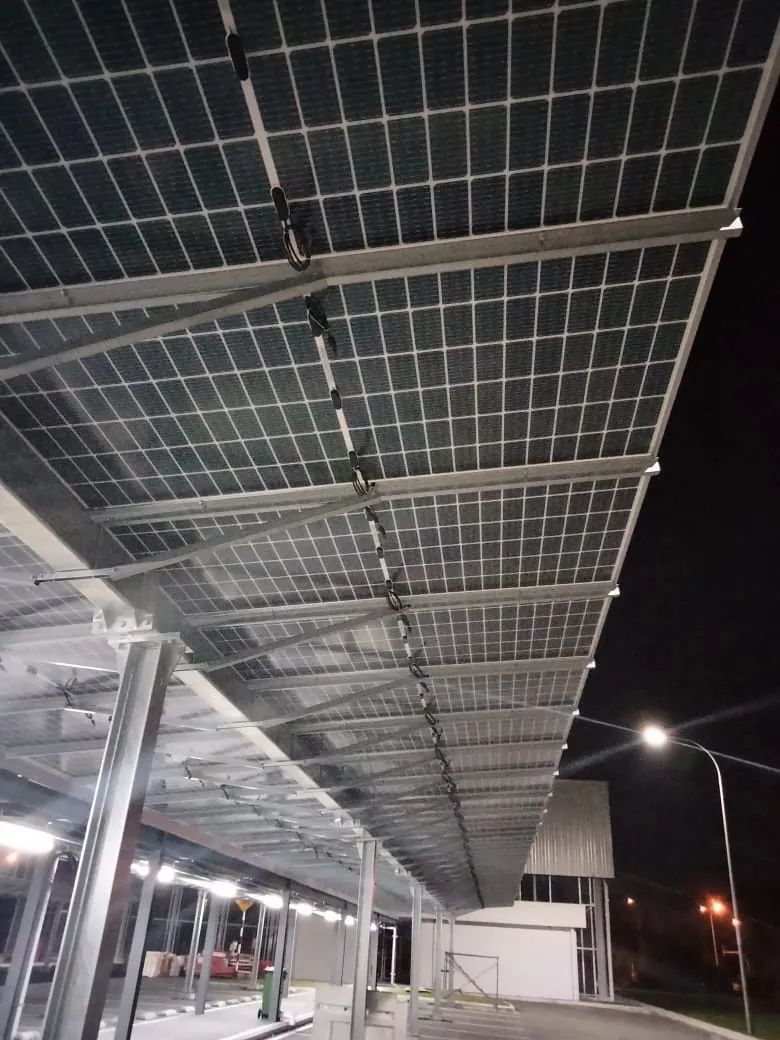
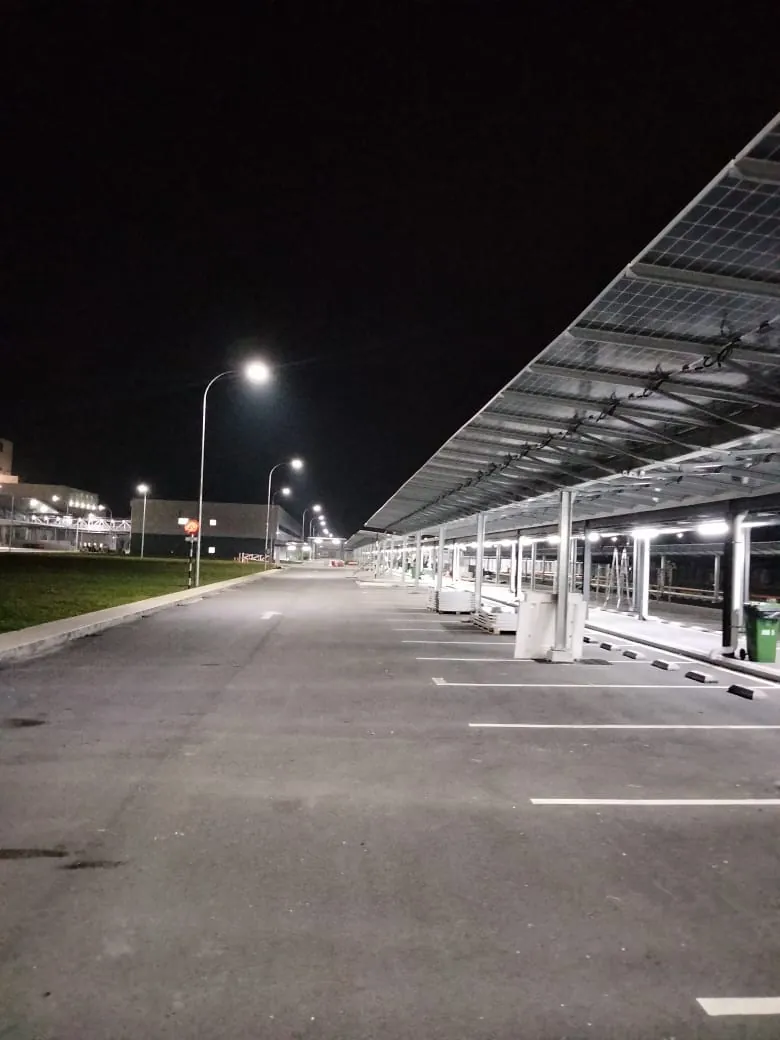
Carports are custom steel structures that need wind-uplift, foundation and drainage design, with bifacial glass modules above the parking bays. Works were phased around an operating plant, including night-time cabling and commissioning.
ERS Energy’s track record across Malaysia and the Asia-Pacific. C&I solar is typically most attractive to businesses with high daytime electricity use.
Payback and savings figures are estimates for reference only, not a quotation or offer. Actual results depend on the site survey, tariff and usage.
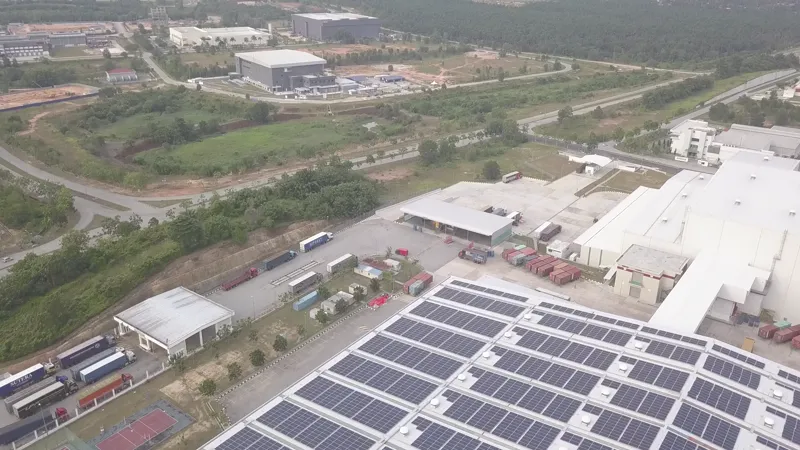
Indicative outcomes by sector; actual results depend on site load profile and tariff. Payback and savings figures are estimates for reference only, not a quotation or offer. Actual results depend on the site survey, tariff and usage.
Factories on TNB NDMV / NDHV tariffs running 10–16 hour shifts have the highest self-consumption ratios (85–95%). Most systems sized at 500 kW–2 MW.
Flat metal-deck roofs with minimal shading offer the best kWp-per-sqm economics. Cold storage operators benefit most with near-100% self-consumption.
Malls on TNB NDMV tariffs typically face constrained roof space. The dual value — energy savings plus green certification — makes retail strong for solar ROI.
Hotels with 24/7 HVAC loads are natural solar candidates. Solar lease and PPA models are preferred — operators avoid CapEx while locking in below-tariff rates.
Real feedback from verified ERS Energy commercial and industrial clients. All systems include 25-year panel warranty, 10–15 year inverter warranty, and ERS Energy’s own 12-month workmanship guarantee.
“We were sceptical about the payback projections — our CFO stress-tested every assumption. But ERS’s numbers held up. Our NDMV General demand charges dropped 35% in the first month. The GITA claim through MGTC reduced our effective system cost.”
“The PPA model was the deciding factor — zero upfront cost, and we pay a fixed PPA rate well below our TNB rate. That’s a discount from day one. ERS handled the SEDA registration, TNB interconnection approval, and all metering. Our only regret is not starting sooner.”
“GBI certification was essential for our repositioning strategy — our anchor tenants require it for their ESG compliance. ERS maximised generation on a difficult 4,200 m² roof with east-west orientation, and the 250 kWh ESS gives our fire systems 4 hours of backup.”
Every project in our portfolio started with a conversation. With GITA capital allowances (60% for solar, 100% for BESS) available for qualifying CAPEX incurred by 31 Dec 2026, and Solar ATAP now open (subject to grid capacity), the economics for C&I solar have never been stronger. Our energy advisors will visit your site, analyse your TNB bills, and deliver a customised savings report — free, no obligation.
Join the businesses already saving with ERS Energy. Send us your last 3–6 months of TNB bills and receive a customised savings report within 5 business days. GITA capital allowance (60% solar, 100% BESS) available for qualifying CAPEX incurred by 31 Dec 2026.