01
Step One
Tell us about your operation.
Slide your monthly bill, pick the closest industry match, and set your typical operating hours per day. The numbers below update live.
 Commercial & Industrial Solar
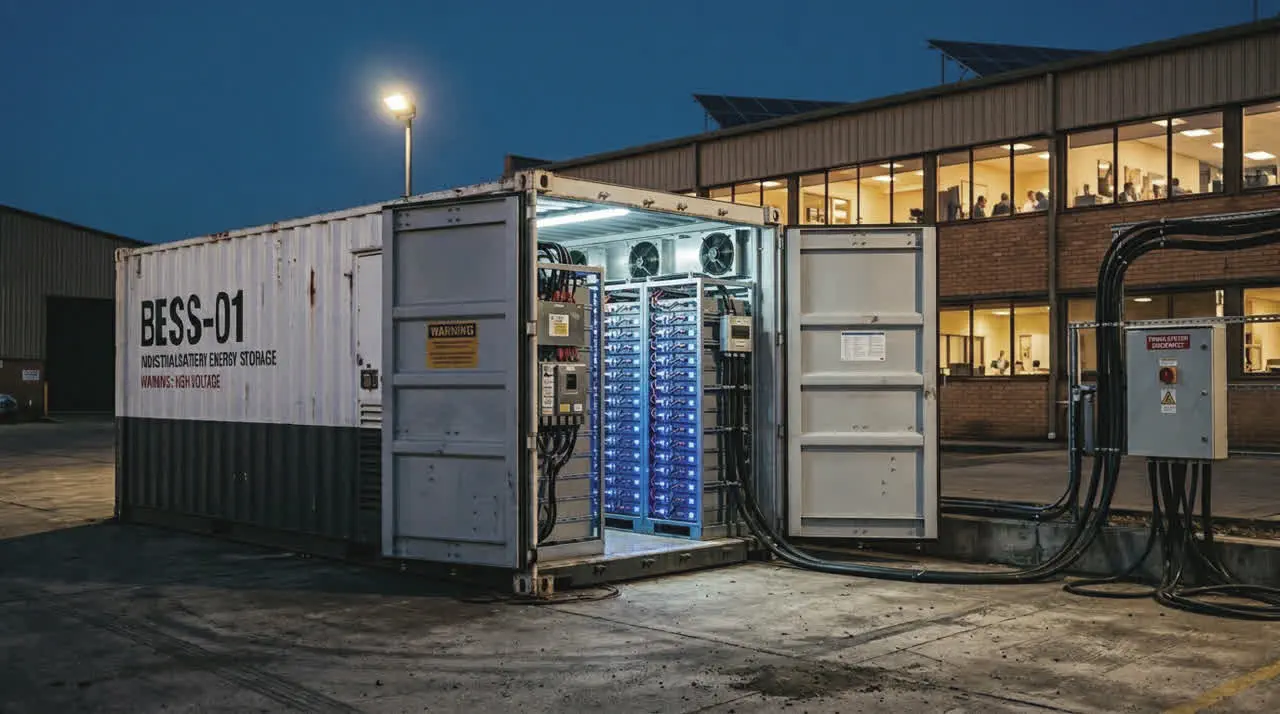
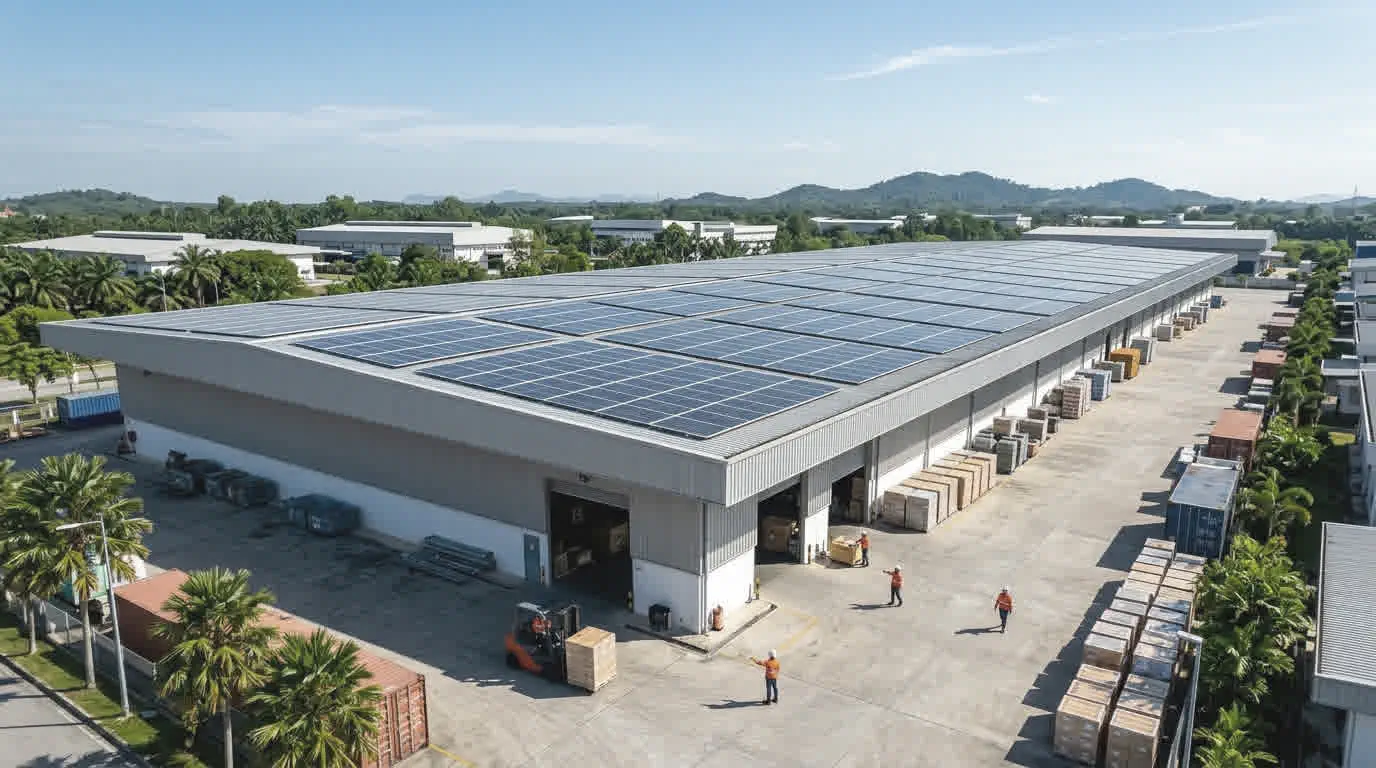
Rooftop solar for factories, warehouses, and commercial buildings — with battery storage (BESS) for evening peak hedging. Solar reduces the energy you buy from TNB, and solar + BESS can also reduce peak-demand (capacity and network) charges, helping you manage one of your largest controllable overheads.
Payback, IRR and savings figures are estimates for reference only, not a quotation or offer. Actual results depend on the site survey, tariff and usage.
Solar generation, battery energy storage, and the integrated hybrid systems that combine both — designed to maximise your energy savings and future-proof your operations.
 Lower Bills
50 kWp to 5 MWp+ systems using Tier-1 panels from JA Solar, Canadian Solar, and LONGi. Self-consumption or Solar ATAP models reduce the electricity you buy from TNB, backed by 25-year panel performance warranties.
System sizing, payback (after GITA), and IRR depend on roof condition, tariff class, and consumption profile; the ranges shown are for the NDMV General tariff (Time-of-Use tariffs give longer paybacks). Final figures confirmed in site survey. Estimates for reference only, not a quotation or offer.
Peak Shaving
50 kWh to 5 MWh+ battery storage from BYD, Huawei, and Sungrow. LFP chemistry for safety and 15+ year operational life. Reduces peak demand charges and protects critical loads from grid outages.
Demand-charge savings vary with tariff structure (NDMV/NDLV) and load profile. Independent ROI modelling provided per site.
Solar + BESS
Solar generation paired with battery storage for maximum self-consumption, peak-shaving, and grid-outage resilience. Eligible for GITA tax allowance (60% of qualifying solar CAPEX, 100% for BESS, via MGTC) when the equipment qualifies and CAPEX is incurred by 31 Dec 2026.
GITA is administered by MGTC: 60% of qualifying solar CAPEX and 100% for BESS, for qualifying CAPEX incurred by 31 Dec 2026 (check MGTC for any extension), set off against up to 70% of statutory income with unused allowance carried forward. Requires MyHIJAU-listed equipment and MGTC approval. MGTC guideline
Businesses on Non-Domestic tariffs pay an energy charge plus capacity and network (demand) charges. This calculator factors in your industry type and operating hours to separate energy savings from demand-charge reduction. For a full financial model with IRR and NPV, use the C&I ROI Calculator.
Slide your monthly bill, pick the closest industry match, and set your typical operating hours per day. The numbers below update live.
System size, monthly and annual savings, simple payback, CO₂ offset, and the capacity-charge reduction broken out separately.
Illustrative estimate only, based on the stated assumptions and current published tariffs/incentives. Not a quotation or financial, tax or investment advice. Actual results depend on a site survey.
Two short walkthroughs from finance and operations teams that turned this estimator into a board-ready figure.
“Electricity is our second-biggest cost. Is solar the answer?”
A food processing facility in Johor with a RM 45,000/month bill running 16 hours a day. Select Food Processing and adjust the hours slider; the calculator factors in the high self-consumption rate typical of processing operations and shows energy plus capacity-charge savings separately.
Result: 510 kWp system, payback 3.7–4.1 years (after GITA), about RM 201,000/year in savings
“We want to reduce peak demand charges, not just energy bills.”
A retail mall running 12 hours a day. The “Capacity savings” tile shows demand-charge reduction separately from energy savings; in this estimate the solar demand credit is small and capped at 15% of the energy savings, so most of the saving comes from energy.
Next step: C&I ROI Calculator for full IRR and NPV figures
Solar isn’t just a sustainability initiative, it’s a financial strategy. Here’s why Malaysia’s leading businesses are investing now.
A 500 kWp factory system saves roughly RM 161,000–197,000 in the first year (NDMV Time-of-Use to General tariff, exported energy not credited), reducing your largest controllable overhead.
Solar + BESS shaves peak demand. A 100 kW reduction saves RM 8,927–9,706/month on NDMV tariffs.
GITA: 60% of qualifying solar CAPEX and 100% for BESS, via MGTC, for CAPEX incurred by 31 Dec 2026 (check MGTC for any extension).
Solar power is generated at a cost fixed at installation, offsetting the NDMV energy charge (29.83 sen/kWh on the General tariff) even as tariffs change.
BESS can cut peak-demand charges through peak shaving. Combined with solar, it can make your cost structure more predictable.
See how Malaysian businesses across industries are cutting costs and meeting sustainability targets with ERS Energy solar and energy storage solutions.
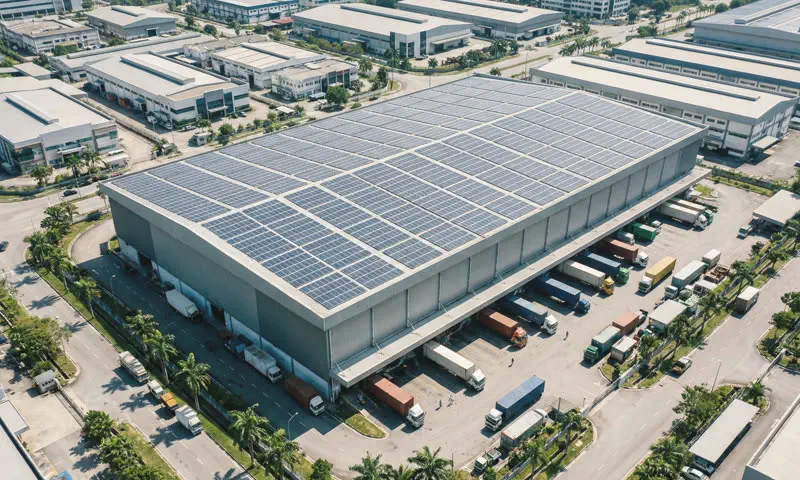
500 kWp rooftop solar with 200 kWh BESS across two factory buildings. Offsets 40% of daytime energy consumption and reduces peak demand by 35%.

1 MWp across 12,000 m² of flat warehouse roofs. Massive unobstructed roof area delivered ideal conditions for maximum generation.
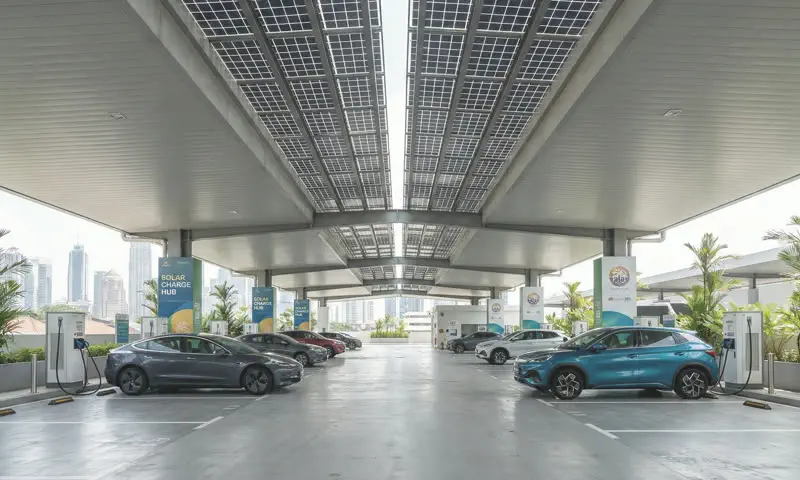
200 kWp per outlet across five locations, achieving Green Building Index compliance and strengthening ESG positioning.
Every industry has a unique energy profile. We design systems that target your specific cost drivers and operational needs.

Capacity + Network charges are a large part of a factory’s bill. Solar + BESS directly attacks this controllable cost.
Payback, IRR and savings figures are estimates for reference only, not a quotation or offer. Actual results depend on the site survey, tariff and usage.
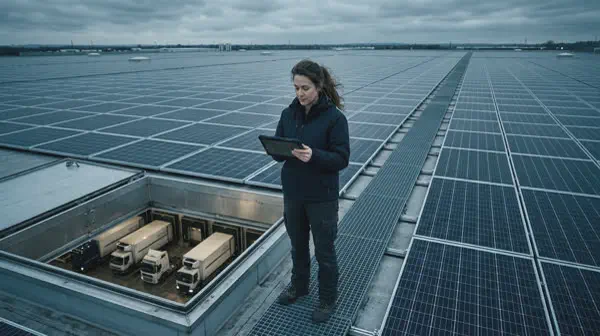
Flat, unobstructed warehouse rooftops are among the best solar sites in any portfolio. BESS protects cold chain during outages.

Solar reduces operating expenses while carpark canopies turn underused space into generation that strengthens ESG reporting.
Property Development · Construction · Real Estate · Steel & Metal Manufacturing · Rubber & Plastic · Food & Beverage · Wood & Timber · Glass & Coated Materials · Pharmaceutical · Industrial Chemicals · Packaging · Power Tools & Electronics · Concrete & Building Materials · Motor Vehicle · Petroleum & Oil and Gas · Water Treatment · Waste & Environmental · Investment Holding · Commercial Banking · Logistics & Transportation · Wholesale & Retail · Agriculture & Aquaculture · IT & Electronics · Architecture & Engineering · and more
Whether you want to own your system outright or keep capital expenditure at zero, we have a financing model that fits your business.
Payback, IRR and savings figures are estimates for reference only, not a quotation or offer. Actual results depend on the site survey, tariff and usage.
expand_circle_right Compare Financing OptionsOur proven C&I project delivery process, from your first consultation to decades of reliable solar energy and ongoing support.

“Our capacity charges dropped 32% in the first quarter after installation. The ROI case ERS presented was conservative.”

“The PPA model meant zero capital outlay. We’re saving 18% on energy costs with no CAPEX, no maintenance responsibility, and no disruption to warehouse operations. The approval process was handled entirely by ERS.”
“ERS handled every regulatory step — the MGTC application for GITA, SEDA registration, TNB coordination. We focused on running our mall while they delivered 300 kWp on schedule across three rooftop zones.”
Cost depends on system size, roof structure and grid connection, so ERS provides a site-specific quotation after a survey. Eligible systems may qualify for the Green Investment Tax Allowance (GITA), and PPA or lease options avoid upfront capex.
Payback depends mainly on daytime load profile and tariff exposure: facilities with high daytime consumption on TNB Medium-Voltage commercial tariffs recover cost fastest, while lighter daytime load or lower tariffs take longer. Use our calculator for an illustrative range for your site.
NEM 3.0 closed to new applications on 30 June 2025. From 1 January 2026 new rooftop systems connect under Solar ATAP (exports credited at the average system marginal price for non-domestic customers, capped monthly); SelCo (self-consumption, no export) remains available. Companies with high process heat or 24-hour operation now layer battery storage to capture morning generation for evening peak discharge. Existing NEM 3.0 participants keep their terms for the remainder of their 10-year contract.
Under the Green Investment Tax Allowance (GITA) for own consumption, qualifying solar PV capex earns a 60% allowance (BESS 100%), set off against up to 70% of statutory income with unused allowance carried forward, for qualifying capex incurred by 31 Dec 2026. Applications go to MGTC (MyHIJAU-listed equipment); ERS prepares the technical documentation.
Add battery storage when your evening peak tariff exposure exceeds 30% of monthly bill, or when you operate 24-hour shifts where solar can't cover production hours. SelCo (no export) makes on-site storage more attractive as peak tariff bands rise.
A Power Purchase Agreement is where ERS finances, builds, owns, and operates the system on your roof; you buy the electricity at a fixed per-kWh rate (typically 25% to 40% below TNB) for 15 to 25 years. Zero upfront cost. Off-balance-sheet for many corporate accounting standards. Best for businesses prioritising cash flow over ownership.
Yes — we install on standing-seam metal, trapezoidal metal, IBR profile, concrete flat, and concrete pitched roofs. Pre-installation includes a structural assessment to confirm load capacity (typical solar dead load: 18 to 22 kg/sqm). For roofs over 15 years old, we assess condition before installation and recommend re-roofing if needed.
Site assessment to commissioning takes 12 to 20 weeks for a typical 500 kWp installation. On-site installation is 4 to 8 weeks. The longest phase is grid interconnection approval (TNB SUKA + SEDA registration) which averages 6 to 10 weeks under SelCo. ERS handles all permitting; you focus on operations.
Tier-1 panels: 25-year linear performance + 12-year product. Inverters: 10-year (extendable to 20). EPC workmanship: 5-year. Mounting structures: 10-year. Optional O&M contracts (5, 10, or 25-year) cover monitoring, scheduled maintenance, panel cleaning, inverter swaps, and performance guarantees.
Our C&I energy advisors will analyse your electricity bills, assess your site, and deliver a free, no-obligation savings report within 5 business days.