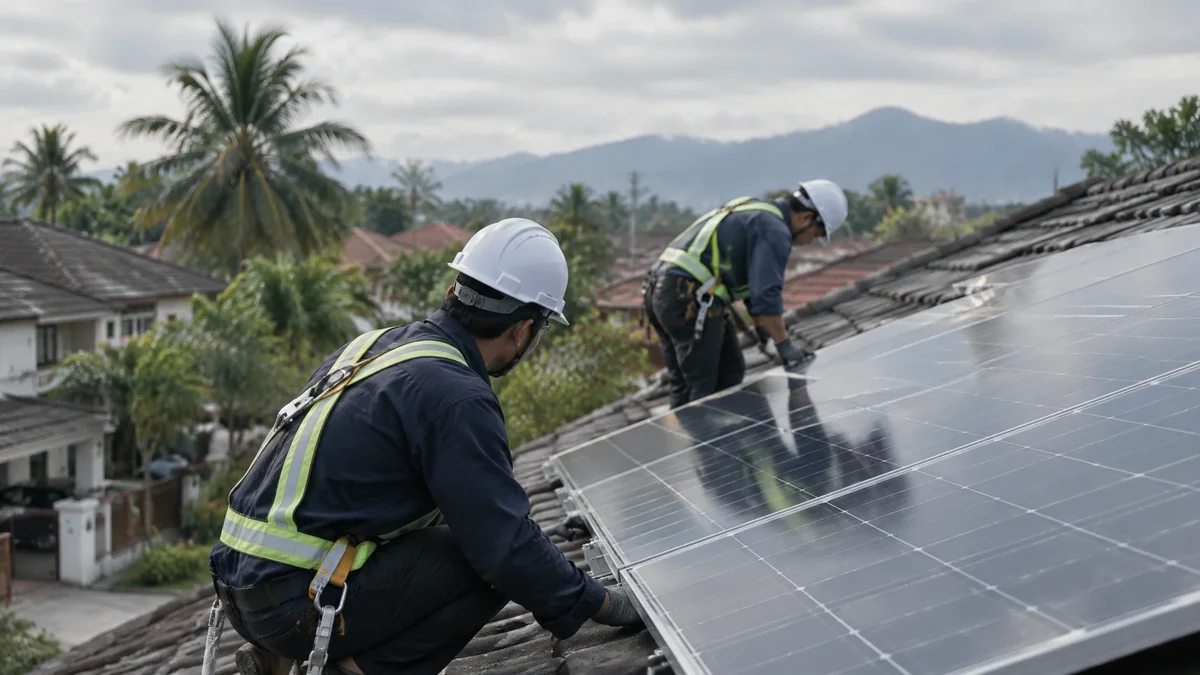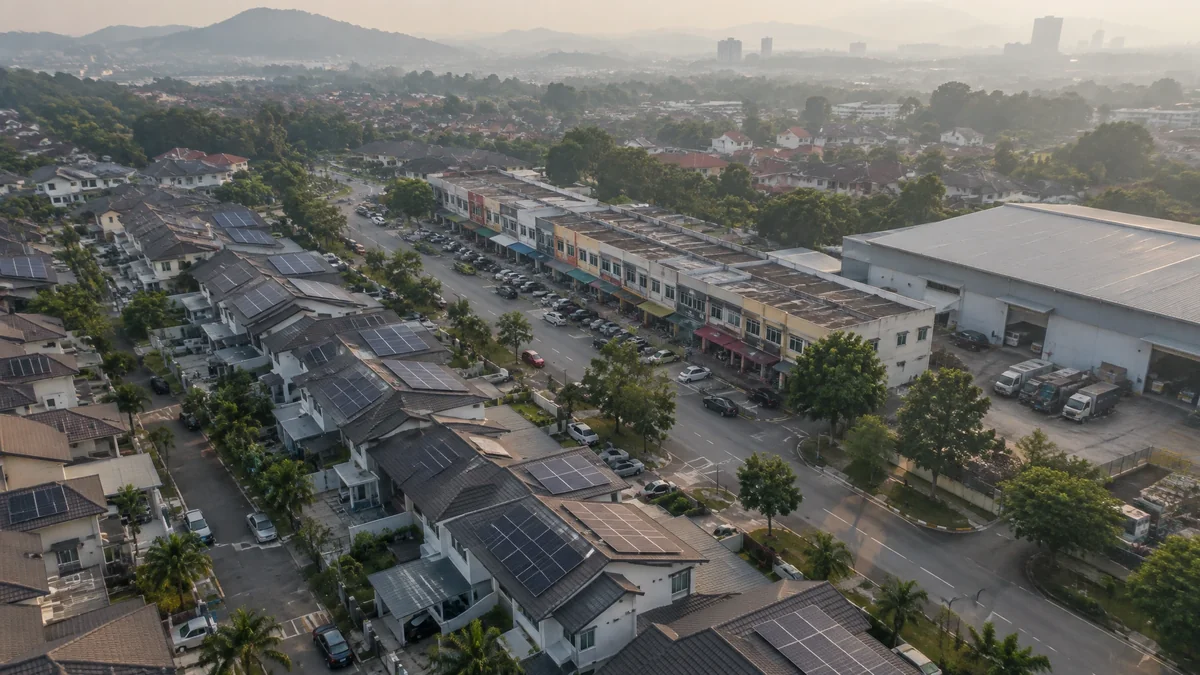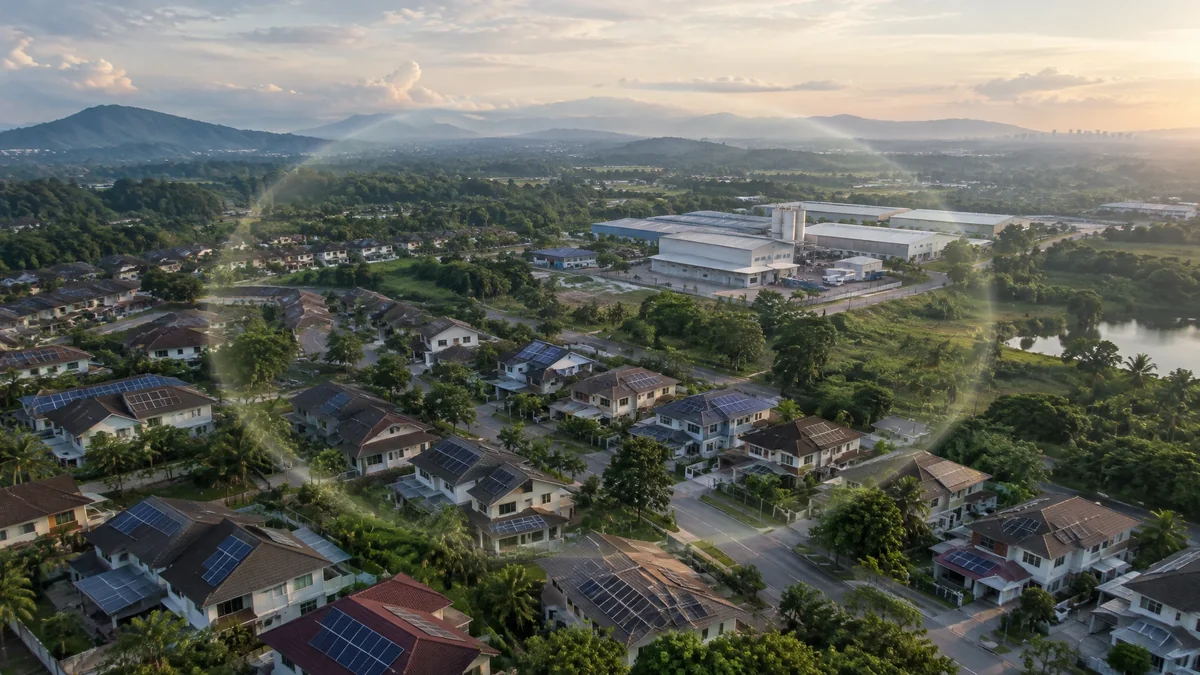
Under CREAM, if a Local Energy Generator and Aggregator (LEGA) offers a lease for your roof, a landed homeowner earns rent with no upfront investment. The LEGA develops, owns, operates and maintains the solar system. The rent is negotiated per site. Only landed homes qualify; condominiums and apartments do not.
Key facts
- Only landed residential properties qualify; condominiums and apartments are not eligible. The host is the individual or entity holding legal title.
- The LEGA develops, owns and operates the solar system on your roof.
- The LEGA handles technical studies, licence applications and ongoing maintenance.
- You sign a Rooftop Lease Agreement covering duration, rental compensation and maintenance responsibilities.
- Rent is negotiated per site; there is no published rate.
How does renting your roof for solar work under CREAM?
The homeowner’s role is to provide the space. A LEGA installs a rooftop solar plant, known as a Local Community Solar Plant (LCSP), and sells the electricity to Local Green Consumers, low or medium voltage businesses within about 5 km, through the national grid. The LEGA builds and operates the plant, and the homeowner earns rent on roof space that would otherwise go unused.
How much rent will I receive?
The rent is negotiated per site between you and the LEGA. The Energy Commission guideline leaves rental compensation to the lease and sets no rate, and there is no public benchmark you can quote. What you are offered will reflect your roof: the LEGA assesses orientation, shading, structure and its distance to customers within about 5 km.
Disputes over the lease are settled under the lease itself, not by the Energy Commission, so the terms you sign matter more than any scheme-wide rule.
Who qualifies as a homeowner?
One hard rule applies: only landed residential properties qualify, and the host is the individual or entity holding the legal title to the property. Terrace, semi-detached and bungalow homes are landed; condominiums and apartments are not eligible. Beyond that, suitability is practical, and the LEGA’s own assessment decides whether it wants your roof.
What does the Rooftop Lease Agreement cover?
The homeowner signs a Rooftop Lease Agreement with the LEGA. It covers three things.
| Term | What to look for |
|---|---|
| Lease duration | The number of years, renewal and exit rights |
| Rental compensation | Amount, payment frequency and any escalation |
| Maintenance responsibilities | Who repairs the roof, removes and reinstalls panels, and insures the system |
This lease is one of five agreements in the CREAM framework (Energy Commission CREAM Guidelines). The other four are among the LEGA, consumers, the Electricity Utility Company (EUC) and the Single Buyer, and the homeowner signs only the lease.
What does the LEGA handle and what do I handle?
The LEGA handles technical studies, licence applications and all ongoing maintenance of the system, and its plants are limited to 100 kWp to 2 MWp per 11 kV feeder across the homes it aggregates. You do not pay for the panels and you do not apply for a licence.
Your responsibilities are the roof and the terms you agree. Roof leaks are a common worry, so ask who is liable for leaks and for damage during installation or panel removal, and whether the work affects any existing roof warranty. Request proof of insurance and of the LEGA’s registration under CREAM. Read what a LEGA is and does before you sign.
How is this different from installing your own solar?
Installing your own system gives you the electricity and its savings but requires investment. A CREAM lease gives you rent rather than power, and someone else carries the cost and the maintenance.
To cut your own bill, explore residential solar. To earn from the roof, a lease may suit you. The CREAM overview shows how the scheme works end to end.
How ERS Energy helps
ERS Energy is a solar contractor: we design, build and maintain systems, and have installed 2 GWp+ across 2,000+ projects since 2009 under ISO 9001, 14001 and 45001. ERS Energy does not lease roofs under CREAM. If you would rather own your system, our residential projects and packages from 4 to 20+ kWp show the options. For policy background, see the ASEAN Centre for Energy policy insight on the CREAM Guideline.
Frequently asked questions
Do I get the electricity from the panels on my roof?
Not under a lease. The LEGA sells the output to local businesses within about 5 km through the grid, and you receive rental compensation as agreed in the lease.
Who is liable if my roof leaks after installation?
The lease should say. Maintenance responsibilities are one of its three core terms, so get liability for leaks, installation damage and panel removal written in, along with proof of the LEGA’s insurance.
Should I have the lease reviewed before signing?
Yes. The lease fixes duration, rent and maintenance, and disputes are settled under it rather than by the Energy Commission. Have a lawyer read it and ask the LEGA for every term in writing.
Will a LEGA definitely want my roof?
No. The LEGA decides after assessing orientation, shading, structure and distance to customers. A landed home is necessary for the lease, but it does not guarantee an offer.
Sources
Facts and figures may vary by the time you read this. This article is for general information only and is not financial, legal, tax or engineering advice. Always double-check key facts and figures with the relevant official source before relying on them.
Want solar on your own roof instead? Get a quote from ERS Energy.
Explore residential solar