CREAM, the Community Renewable Energy Aggregation Mechanism, lets a Local Energy Generator and Aggregator (LEGA) install rooftop solar on landed homes and sell the power to businesses within about 5 km through TNB’s grid. Homeowners can earn rent if a LEGA leases their roof, consumers get green electricity, and applications opened on 1 June 2025.
Key facts
- Full name: Community Renewable Energy Aggregation Mechanism (CREAM), issued by the Energy Commission (Suruhanjaya Tenaga).
- Applications opened on 1 June 2025, in Peninsular Malaysia.
- Each plant must be 100 kWp to 2 MWp per 11 kV feeder, on landed homes only; condominiums and apartments are not eligible.
- Consumers must be registered low or medium voltage customers, in any category, of the Electricity Utility Company (EUC, for example TNB) within about 5 km of the plant.
- The Single Buyer handles registration and billing; power travels over TNB’s distribution grid.
How does CREAM community solar work?
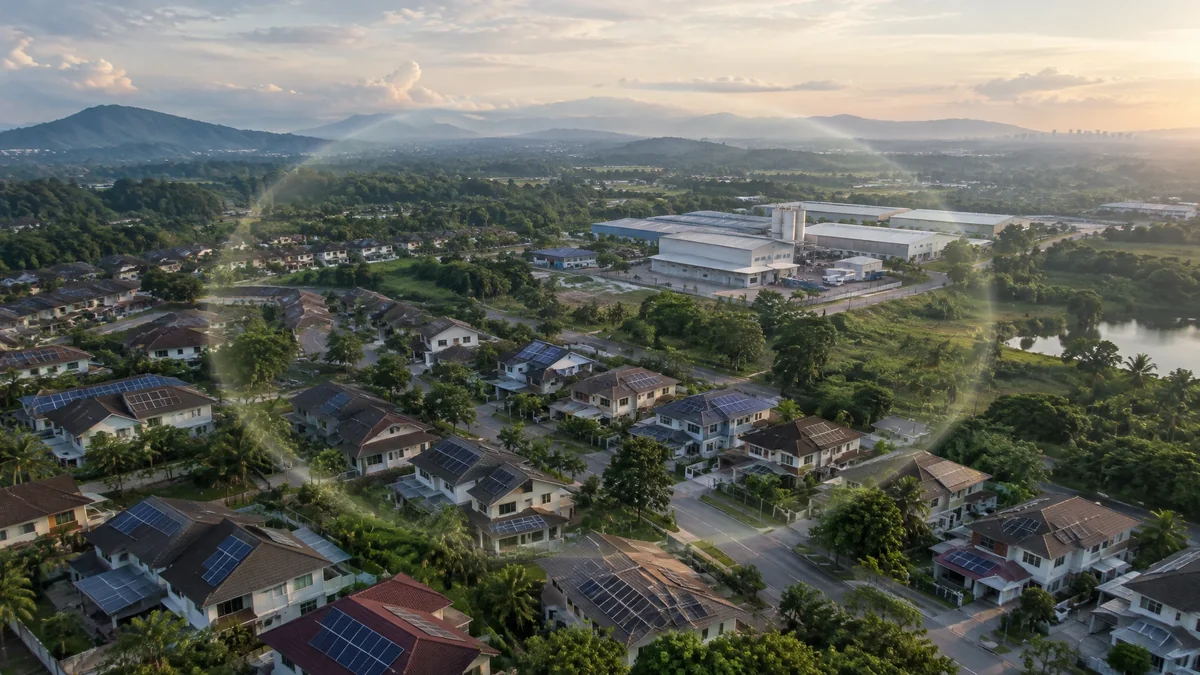
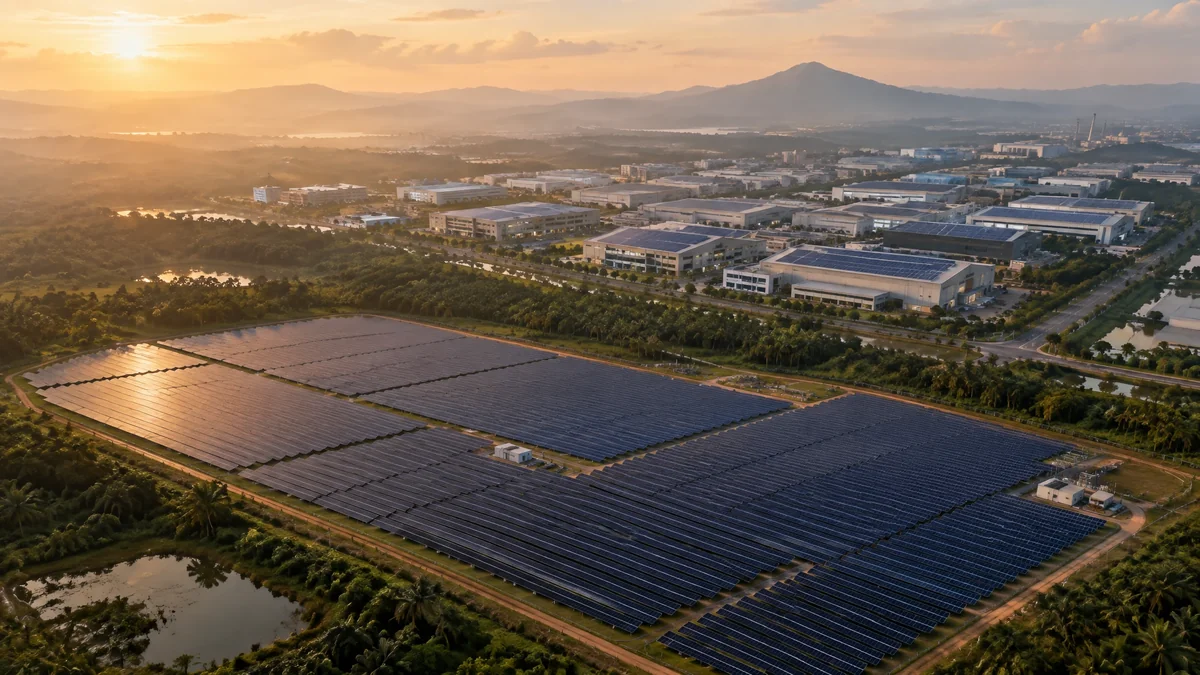
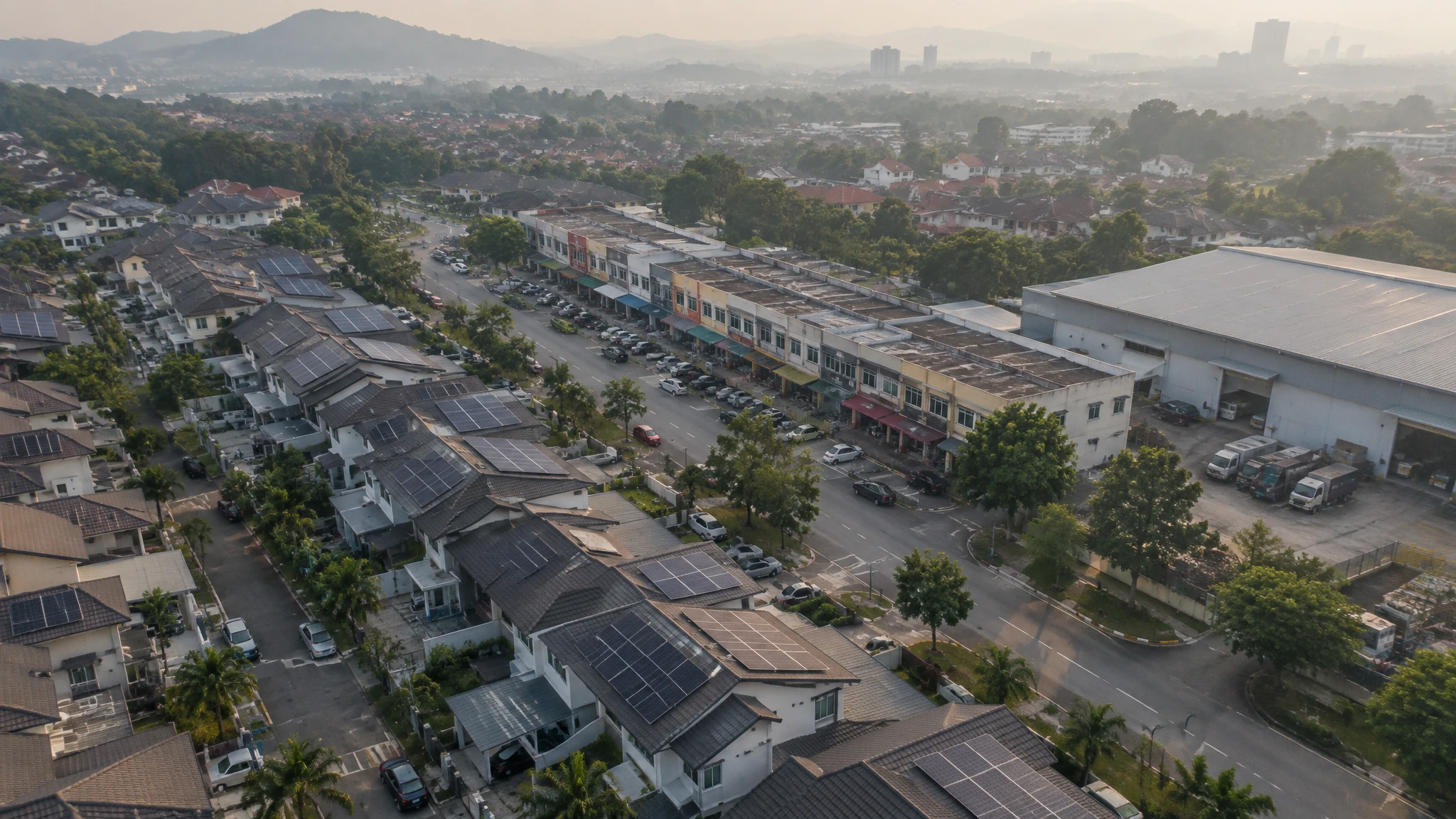
CREAM connects three groups in one neighbourhood. Landed homeowners lease their roofs, a LEGA builds and runs solar plants on those roofs, and nearby businesses buy the electricity. The power travels through the national grid (Open Access) rather than a private wire. The LEGA must be a locally owned company, with at least 51% local ownership, and may also be the consumer.
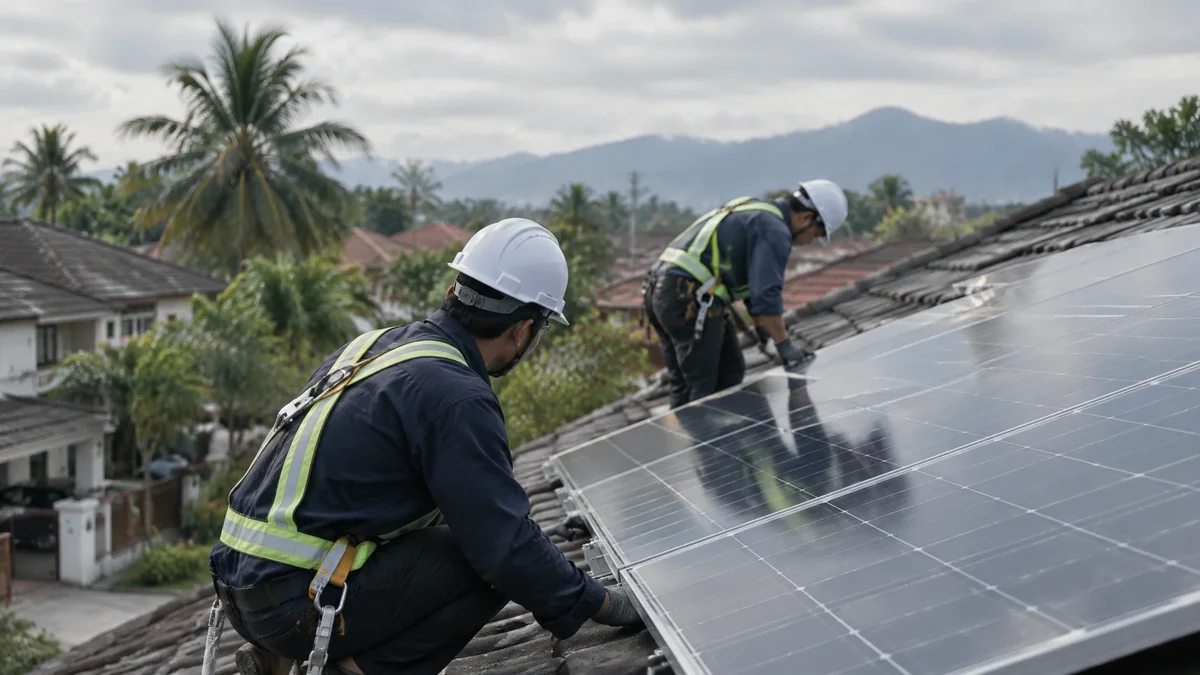
Each rooftop system is a Local Community Solar Plant (LCSP). The LEGA pools the output of its plants and supplies it to Local Green Consumers, which are businesses within roughly 5 km. The LEGA builds and operates the plants, so neither the homeowner nor the business runs anything.
The Single Buyer, the market administrator, registers the LEGA. Under the New Enhanced Dispatch Arrangement (NEDA), it also buys any excess energy the LEGA sells to the grid, at a nominal rate such as 8 sen/kWh, and the green attributes of that energy pass to it. The EUC reads the meters: one at the plant (MLEGA) and one at the consumer’s premises (MLGC).
Who takes part in CREAM?
Five parties are involved.
| Party | Who they are | What they do |
|---|---|---|
| LEGA | Local Energy Generator and Aggregator | Develops, owns and operates the rooftop plants and contracts with consumers |
| Local Green Consumer | A business within about 5 km | Buys green electricity from the LEGA |
| EUC | Electricity Utility Company, for example TNB | Manages the physical grid, reads meters, bills the balance and acts as supplier of last resort |
| Single Buyer | Market administrator | Registers participants, invoices the LEGA for the network charge and settles |
| Homeowner | Owner of a landed home | Leases roof space to the LEGA |
Five contracts connect them: the Bilateral Energy Supply Contract (LEGA and consumer), the Distribution Renewable Energy System Access Agreement (LEGA and EUC), the NEDA agreement (LEGA and Single Buyer), the rooftop lease (LEGA and homeowner), and the CREAMA, the backup supply agreement between the consumer and the EUC. Our guide to what a LEGA is maps each one.
How is CREAM different from CGPP and CRESS?
The Corporate Green Power Programme (CGPP) and the Corporate Renewable Energy Supply Scheme (CRESS) suit large energy users. CREAM has no corporate-scale barrier: a plant needs 100 kWp to 2 MWp per 11 kV feeder, and a business qualifies by being a registered low or medium voltage customer near the plant. The full comparison is in CGPP vs CRESS vs CREAM.
How is the price set and what does it cost?
The electricity rate is not a regulated tariff. The LEGA and the consumer agree it in the Bilateral Energy Supply Contract, so no standard tariff is imposed; the contract also governs payment terms and green attribute transfers. You pay the LEGA the agreed rate for green electricity delivered and the EUC for the remaining balance.
The Community Access Charge (CAC) is paid by the LEGA, not the consumer, and the Single Buyer invoices it (Energy Commission CREAM Guidelines, section 13). It is 9 sen/kWh, a single rate for firm and non-firm supply, from the fourth Regulatory Period (Energy Commission, 29 August 2025). The CAC is fixed for the three-year Regulatory Period, aligned with Incentive Based Regulation, and any revision is capped at 15%. It is not charged on excess energy sold through NEDA, and the Energy Commission publishes the current rate at st.gov.my. Eligibility criteria are set out in who qualifies for CREAM; homeowners should read the rooftop lease guide.
How ERS Energy helps
A LEGA needs rooftop plants designed, built and maintained to one standard across many small sites, which is the core of what ERS Energy does: 2 GWp+ installed across more than 2,000 projects since 2009, under ISO 9001, 14001 and 45001. Businesses weighing a nearby plant against their own roof can compare both with us.
See our commercial and industrial solar, investment structuring and residential solar services. For market background, read the ASEAN Centre for Energy policy insight on the CREAM Guideline.
Frequently asked questions
Do I need to install anything to buy CREAM power?
No. The LEGA builds and owns the plant, and the electricity arrives through the existing grid. Your premises stay connected to TNB or another EUC, which supplies whatever the solar plant does not cover.
How is CREAM different from Solar ATAP?
Solar ATAP lets a consumer generate solar on its own premises. CREAM lets a third-party LEGA generate on other people’s roofs and sell to nearby businesses. They are separate programmes serving different needs.
How do I find a CREAM plant near me?
There is no public register of plants. The Energy Commission’s CREAM page carries the guidelines and updates, and LEGAs themselves are the practical source for plant locations and distances.
Does CREAM apply in Sabah and Sarawak?
No. CREAM applications opened for Peninsular Malaysia only, so businesses in Sabah and Sarawak are outside the current scheme.
Sources
- Energy Commission CREAM Guidelines, section 13
- Energy Commission, 29 August 2025
- ASEAN Centre for Energy policy insight on the CREAM Guideline
Facts and figures may vary by the time you read this. This article is for general information only and is not financial, legal, tax or engineering advice. Always double-check key facts and figures with the relevant official source before relying on them.
Wondering whether a CREAM plant or your own rooftop fits your site?
Talk to ERS Energy