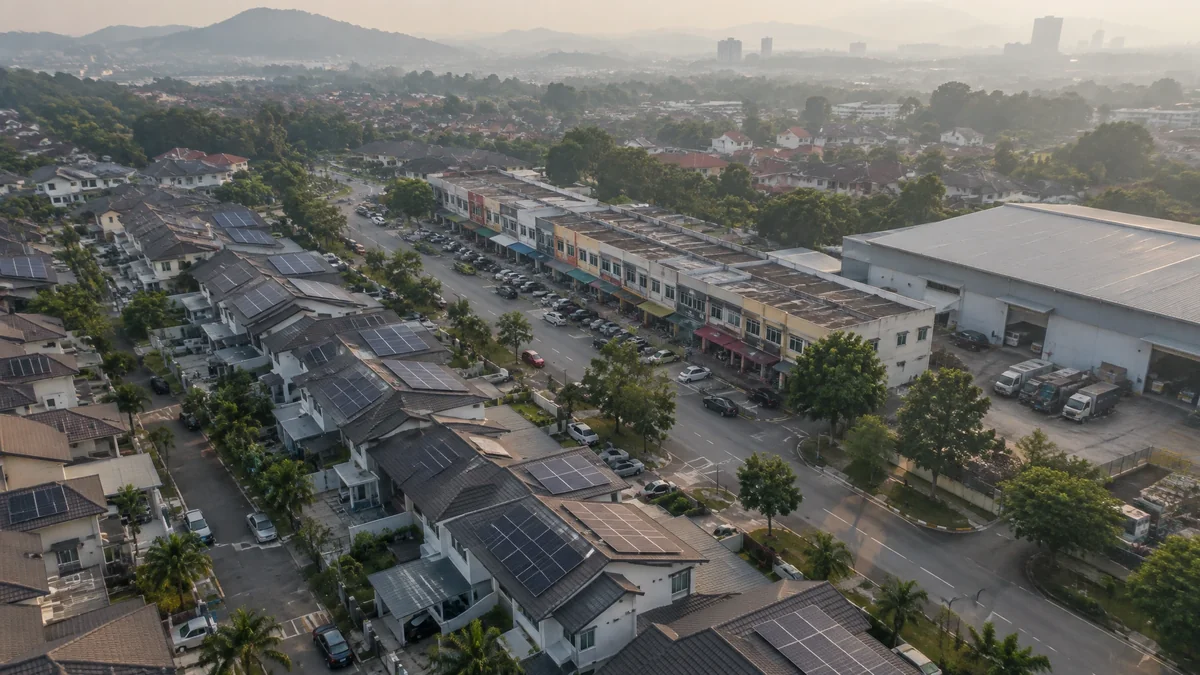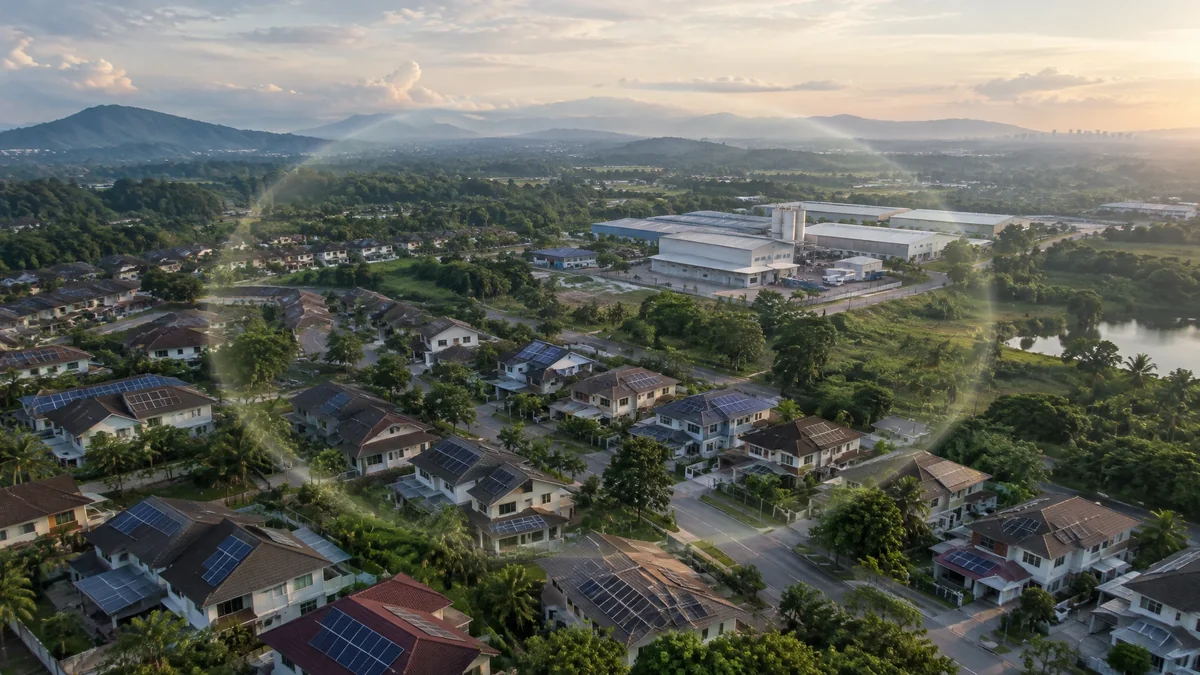
A LEGA is a Local Energy Generator and Aggregator: the owner of a rooftop solar plant, called a Local Community Solar Plant (LCSP), connected to the national grid under CREAM. It develops and runs the plant, contracts with nearby Local Green Consumers, and acts as lead applicant to the Single Buyer for its consumers.
Key facts
- A LEGA owns a Local Community Solar Plant (LCSP) integrated into the national grid.
- The LEGA must be a locally owned company with at least 51% local ownership, and may also be the consumer.
- Its plants must be 100 kWp to 2 MWp per 11 kV feeder, on landed homes only.
- It can contract with multiple consumers, up to the plant’s maximum registered export energy.
- A LEGA must operate in Peninsular Malaysia.
- The LEGA signs four of CREAM’s five agreements; the consumer signs the fifth with the EUC.
What is a LEGA and what does it do?
The Community Renewable Energy Aggregation Mechanism (CREAM) is built around the LEGA. Without one there is no plant to lease a roof for and no green electricity to sell.
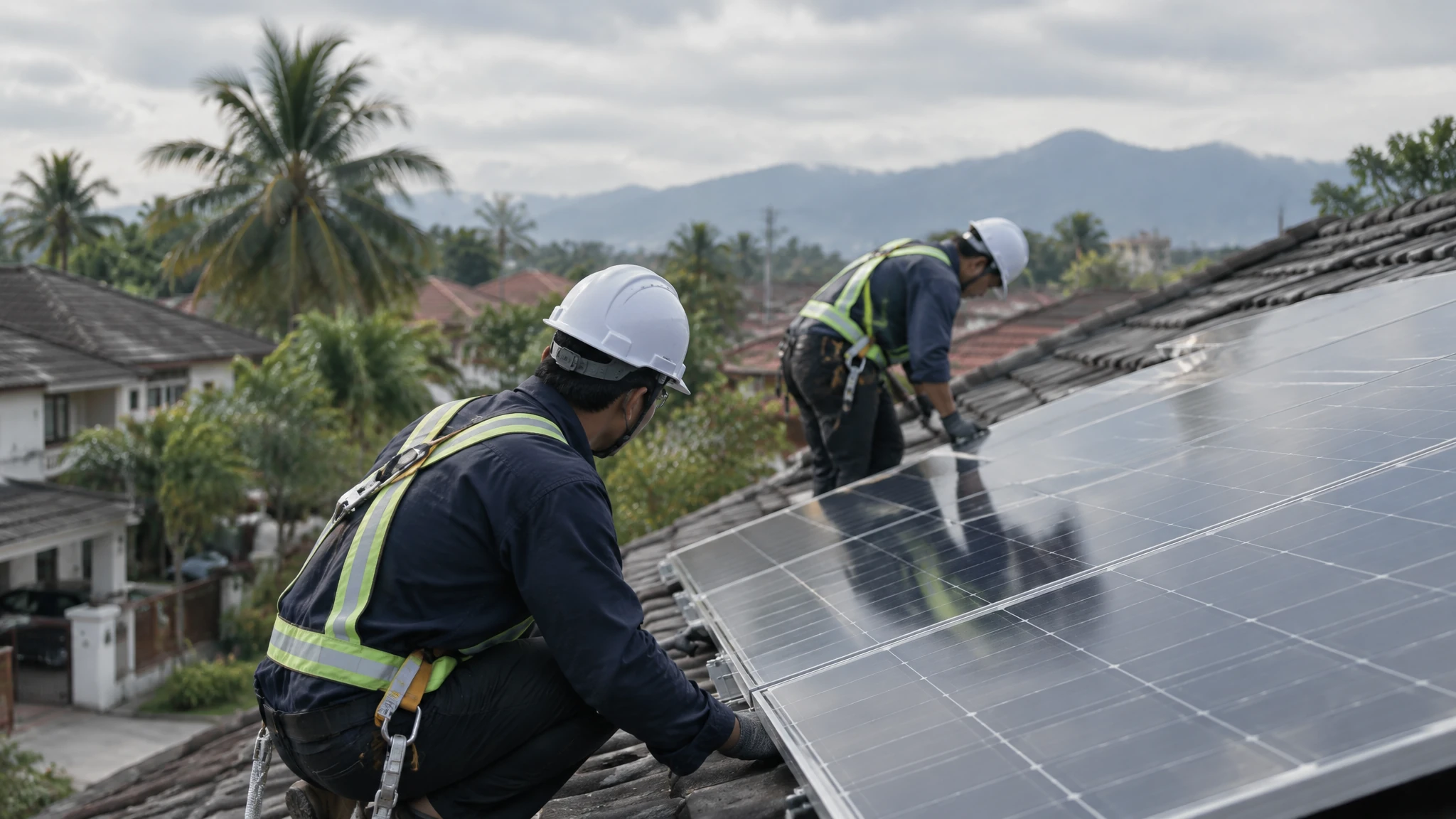
In practice a LEGA is a solar developer or operator that installs photovoltaic (PV) systems on the roofs of landed homes, joins them together as one aggregated resource, and sells the output to businesses nearby. Each rooftop system is an LCSP, and the LEGA owns it.
What are the four responsibilities of a LEGA?
The programme assigns four duties to the LEGA.
| Duty | What it covers |
|---|---|
| Asset management | Developing, owning, operating and maintaining the LCSP |
| Energy aggregation | Establishing contracts with multiple local green consumers, up to the plant’s maximum registered export energy |
| Administrative lead | Acting as lead applicant, submitting documentation to the Single Buyer on behalf of participating consumers |
| Contractual management | Centralising the commercial agreements within the CREAM framework |
This matters because a business that wants solar electricity does not deal separately with the grid operator, the Single Buyer and the homeowner. The LEGA is the single point of contact for those arrangements, except that the consumer signs its backup supply agreement directly with the Electricity Utility Company (EUC).
Which contracts does a LEGA sign?
CREAM rests on five agreements, described in the Energy Commission CREAM Guidelines. The LEGA is party to four.
| Agreement | Between | LEGA signs? |
|---|---|---|
| Bilateral Energy Supply Contract | LEGA and each Local Green Consumer; sets rates, payment terms and green attribute transfers | Yes |
| Distribution Renewable Energy System Access Agreement | LEGA and the EUC, for example TNB; binds the LEGA to the technical grid-connection requirements | Yes |
| NEDA agreement | LEGA and the Single Buyer, for market participation and settlement | Yes |
| Rooftop lease | LEGA and each participating homeowner | Yes |
| CREAMA (backup supply) | Consumer and the EUC; names the EUC as supplier of last resort if the plant fails to generate | No |
The CREAMA secures the consumer’s backup supply; see how supplier of last resort works.
Who can become a LEGA?
A LEGA must be a company operating in Peninsular Malaysia with at least 51% local ownership, which is a prerequisite for its generation licence. It may own both the plant and the consumer facility. Its plant must be installed on landed residential houses with a capacity of 100 kWp to 2 MWp per 11 kV feeder, a minimum export capacity of 100 kW, and a Direct Connection to the grid at low voltage (Energy Commission CREAM Guidelines, section 8.3). Plant design, licensing and maintenance sit with the LEGA rather than with the homeowner or the consumer.
What does a LEGA mean for homeowners and businesses?
For a landed homeowner, the LEGA is the counterparty to the rooftop lease, and it carries the technical studies and licence applications. For a business, the LEGA is the electricity seller: the price is negotiated directly, and the business must sit within about 5 km of the plant. The 5 km rule and consumer criteria explain who qualifies, and the CREAM overview gives the full picture.
How ERS Energy helps
A developer planning to act as a LEGA needs plants that are designed, built and commissioned to a consistent standard across many roofs. ERS Energy has delivered 2 GWp+ across 2,000+ projects in six markets since 2009, and holds ISO 9001, 14001 and 45001 certification. See our solutions and project portfolio.
Frequently asked questions
Is the homeowner a LEGA?
No. The homeowner leases the roof and receives rental compensation. The LEGA develops, owns and operates the solar system, and handles the studies, licences and maintenance.
What is an LCSP?
A Local Community Solar Plant is a rooftop solar PV plant owned by a LEGA and integrated into the national grid. Its output is supplied to local green consumers within about 5 km.
Who settles the network charge?
The LEGA pays the Community Access Charge, the fee for using the distribution network. The Single Buyer invoices and collects it from the LEGA, based on the energy the LEGA exports to the grid, excluding excess energy sold through NEDA. It is fixed for a three-year Regulatory Period.
Is the EUC the same as TNB?
In Peninsular Malaysia, TNB is an example of an EUC. The EUC operates the grid, bills the balance of the consumer’s electricity and acts as supplier of last resort under the backup agreement.
Sources
Facts and figures may vary by the time you read this. This article is for general information only and is not financial, legal, tax or engineering advice. Always double-check key facts and figures with the relevant official source before relying on them.
Planning a rooftop portfolio for CREAM? Speak to our engineers.
Contact ERS Energy