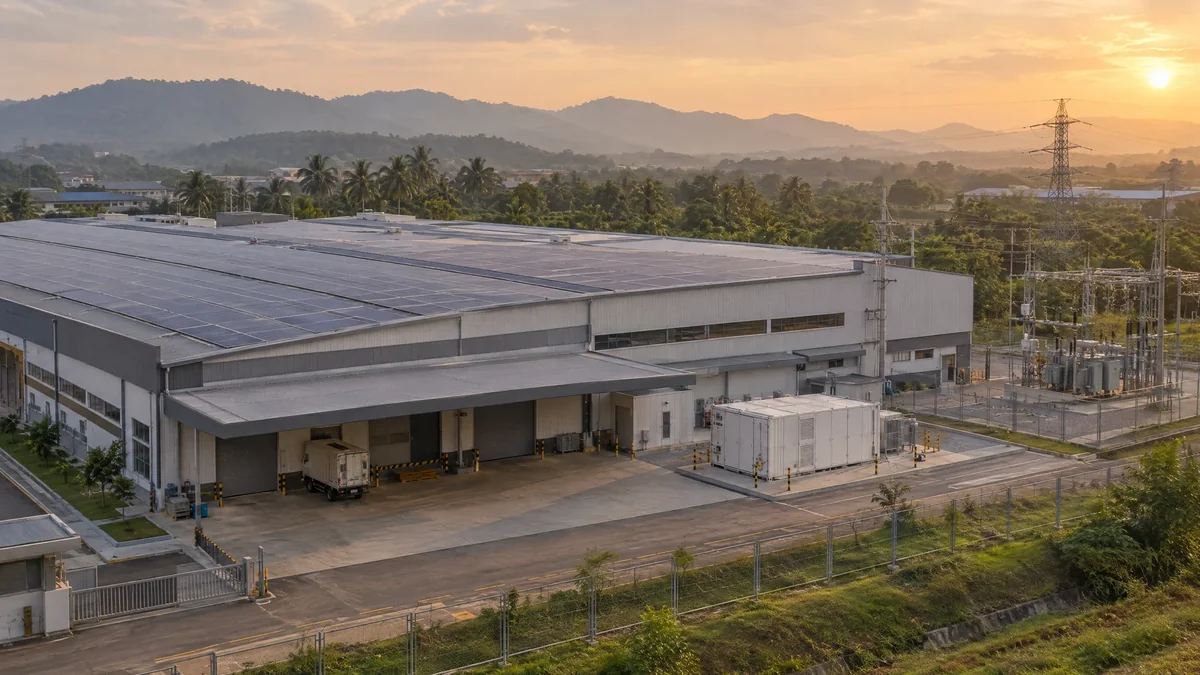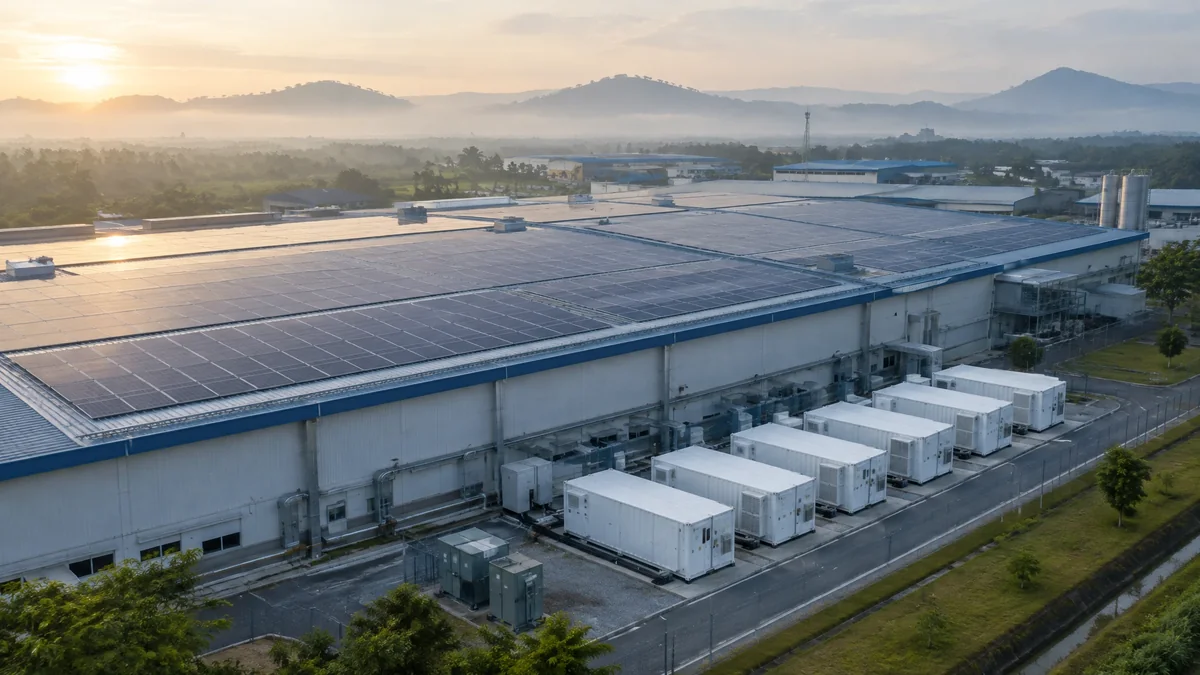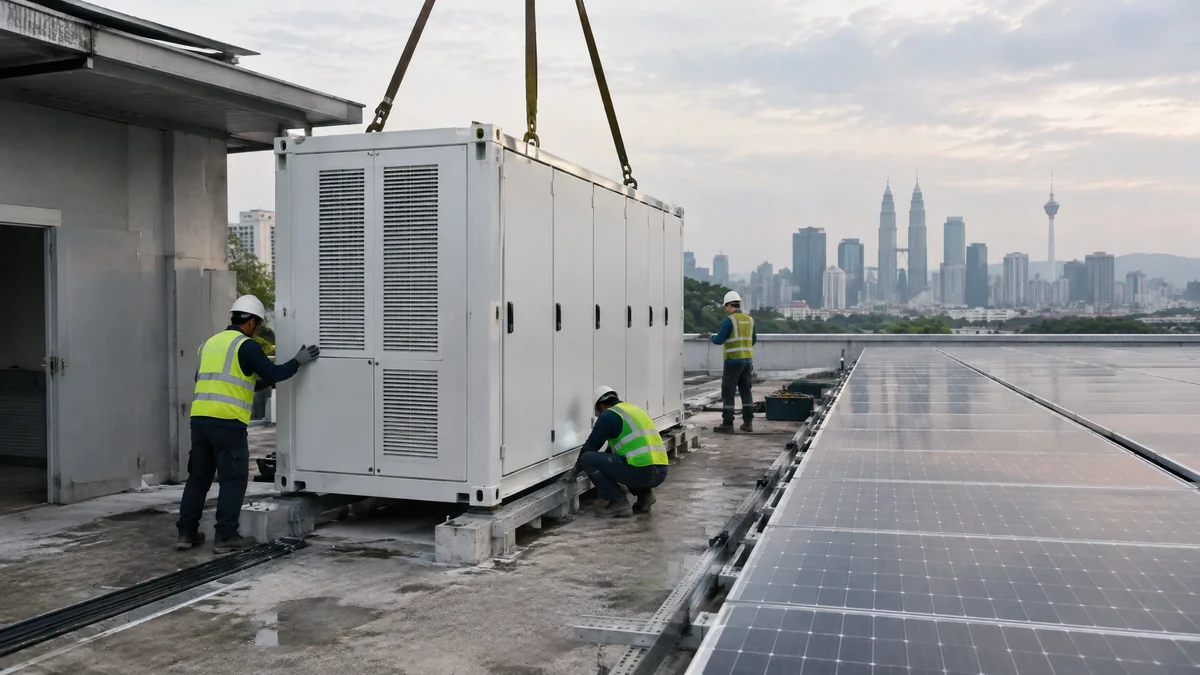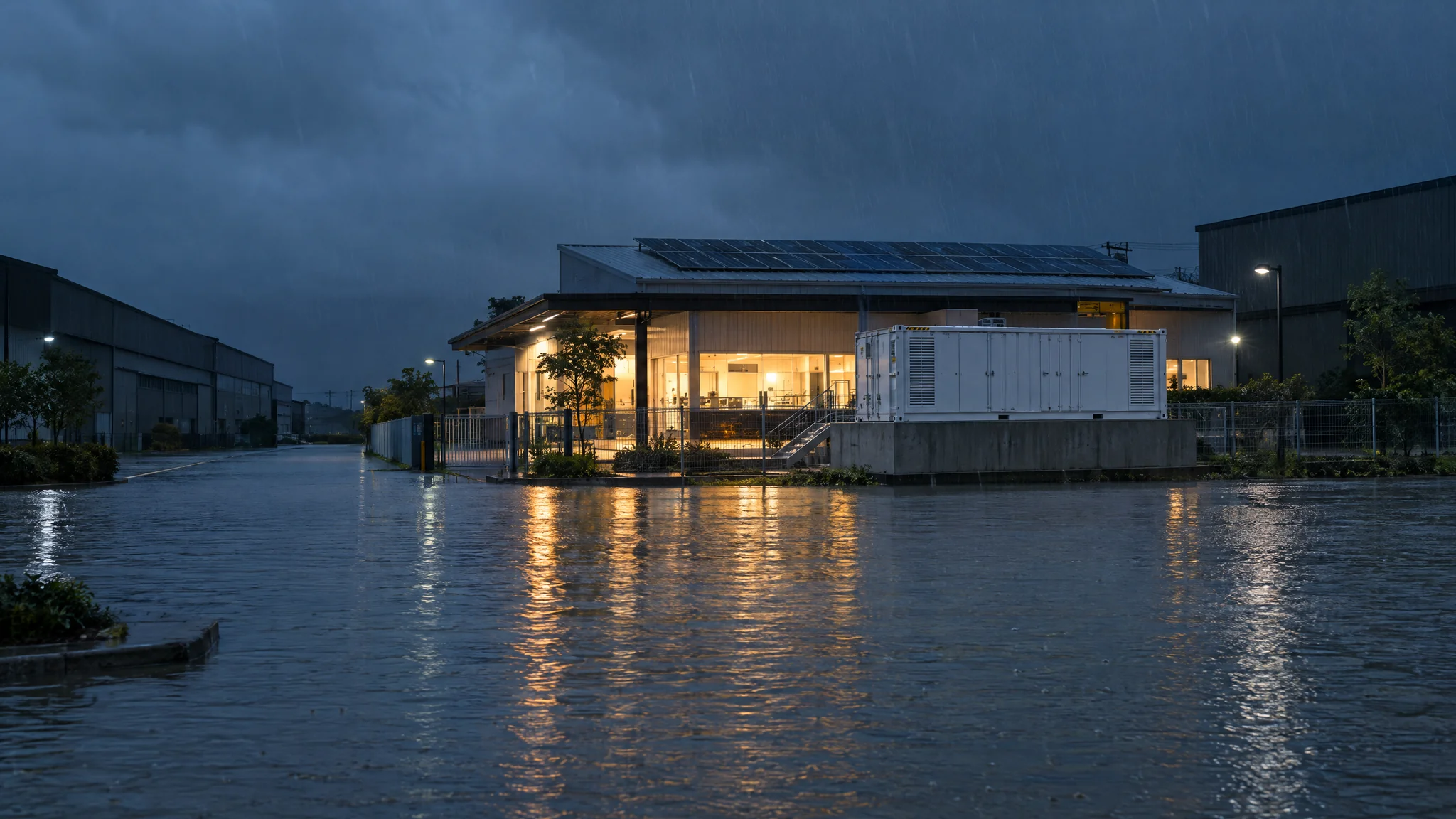
Energy disaster recovery in Malaysia is the plan and equipment that keep a business’s critical loads running through a grid outage, flood or voltage dip, and then restart operations safely. For most sites, it means a battery energy storage system (BESS) designed for islanded backup, solar to recharge it, and equipment sited above flood levels.
Key facts
- The 2021 floods caused losses of RM6.1 billion in Malaysia, including about RM0.9 billion in manufacturing (Department of Statistics Malaysia).
- On 19 December 2021, TNB shut 333 substations in six states for safety, 117 of them in Selangor.
- A landslide on 13 September 2025 brought down a tower on Sabah’s 275 kV Kolopis-Segaliud line, cutting power to about 230,000 consumers in six districts until the night of 16 September.
- The Energy Commission’s BESS Safety Guidelines (GP/ST/No.62/2026) require grid-connected batteries to disconnect during a grid failure, and a transfer switch or circuit breaker for any islanded operation.
What is energy disaster recovery?
It is the power side of business continuity. IT teams plan how to recover data after a failure. Energy disaster recovery plans how to keep the loads that matter powered while the grid is down, and how to bring the site back safely when supply returns.
What events cut power to Malaysian businesses?
Malaysia’s grid is reliable on average. Peninsular customers averaged 46.93 minutes without supply in 2025. The risk sits in single events, and they come in four kinds.
| Event | Recent example |
|---|---|
| Floods and safety shutdowns | By 1 December 2024, TNB had shut 230 substations across eight Kelantan districts as flood water rose. |
| Transmission failures | The September 2025 Sabah landslide cut power to about 230,000 consumers, and supply was reconnected on the night of 16 September. |
| Power plant trips | Lightning tripped the 2,242 MW Edra plant in Melaka on 15 October 2025, and parts of Kuala Lumpur and Johor Bahru lost power for more than an hour. |
| Generator trips in Sarawak | A generator trip at Bakun on 21 December 2024 caused a partial outage in parts of Kuching, Sibu, Bintulu and Miri. |
During floods, TNB switches off substations to protect the public, so a plant can lose power even when its own floor stays dry.
What does a power disruption really cost?
More than the hours of lost output. The Department of Statistics Malaysia put the losses from the 2021 floods at RM6.1 billion. About RM0.9 billion of that was in manufacturing.
Short events add up too. MIDA reported in September 2026 that Sensata Technologies’ Malaysian plant lost about RM70,000 per power quality incident, at about 14 incidents a year. Two targeted mitigation units costing about RM25,000 brought those events down to almost zero.
Then come the hidden costs: scrapped batches, spoiled cold-chain stock, restart time and missed shipments.
Can a battery keep a business running during a blackout?
Yes, if it is designed for backup. A standard grid-tied BESS will not do it. The Energy Commission’s BESS Safety Guidelines require anti-islanding protection that disconnects a grid-connected battery during a grid failure, so it cannot feed power into lines that crews think are dead.
To run islanded, the guidelines require a transfer switch or circuit breaker that isolates the battery from the grid while it keeps supplying your internal loads. Circuits that stay live in that mode need clear, permanent signage at the distribution board. With that design in place:
- Critical loads stay up. Control systems, servers, refrigeration, pumps, security and emergency lighting run from the battery.
- Solar extends the runtime. In longer outages, solar recharges the battery during the day.
- Gensets run less. A battery can cover the gap while a diesel generator starts, then share the load to cut runtime and fuel.
- Load shedding protects the battery. The energy management system drops non-essential loads first.
Voltage dips are a different problem. A dip can trip sensitive equipment in a fraction of a second, and how fast a backup system responds depends on its design. For the most sensitive processes, a dedicated UPS or power quality equipment may still be the right answer.
How do you make battery storage safe in a flood-prone area?
Start with siting. Place batteries, inverters and switchgear above known flood levels, on raised plinths or platforms, using the site’s own flood history. The Energy Commission’s guidelines then set the baseline:
- Batteries should be installed outdoors. Indoor installations need fire suppression and must meet the Fire and Rescue Department’s requirements.
- Outdoor enclosures and equipment must be rated IP54 or higher.
- Thermal runaway protection is designed and tested to UL 9540A, or to the requirements of the fire and safety authorities.
- Lightning protection follows MS IEC 62305.
- Maintenance happens under a valid permit to work, carried out by competent persons.
How do you build an energy disaster recovery plan?
- Audit critical loads. List which loads must never stop, which can pause and which can wait.
- Set a runtime target. Minutes to ride through a trip, hours for an outage, or days for a flood.
- Design the system. Size solar, the battery and the transfer equipment, and integrate any existing generators.
- Test and drill. Commission the system, then rehearse the switchover with your facilities team.
- Maintain it. Remote monitoring and scheduled maintenance keep it ready.
How ERS Energy helps
We have delivered more than 2,000 solar projects since 2009, and we design solar and battery storage for commercial and industrial sites as one system. For backup, the design covers your critical loads, the transfer and islanding equipment, and where the equipment sits on your site. Operations and maintenance contracts of 5, 10 or 25 years keep the system ready. See our C&I projects.
Frequently asked questions
How long can a battery power my critical loads?
It depends on the battery’s capacity, the size of your critical load and the weather. A battery sized for a few hours can last much longer when solar recharges it during the day. Size the system to the runtime target in your continuity plan.
Does a BESS replace my diesel generator?
Not always, and it often works alongside one. The battery covers the gap while the generator starts, shares the load to cut runtime and fuel, and can carry short outages on its own. For multi-day events, a generator may still be part of the plan.
Will my site lose power in a flood even if it stays dry?
It can. During floods, TNB switches off substations in affected areas for public safety. In December 2021 it shut 333 substations in six states. A site supplied by one of those substations loses power even if its own buildings are untouched.
Sources
Facts and figures may vary by the time you read this. This article is for general information only and is not financial, legal, tax or engineering advice. Always double-check key facts and figures with the relevant official source before relying on them.
Talk to our engineers about a solar and battery backup plan for your site.
Plan your backup