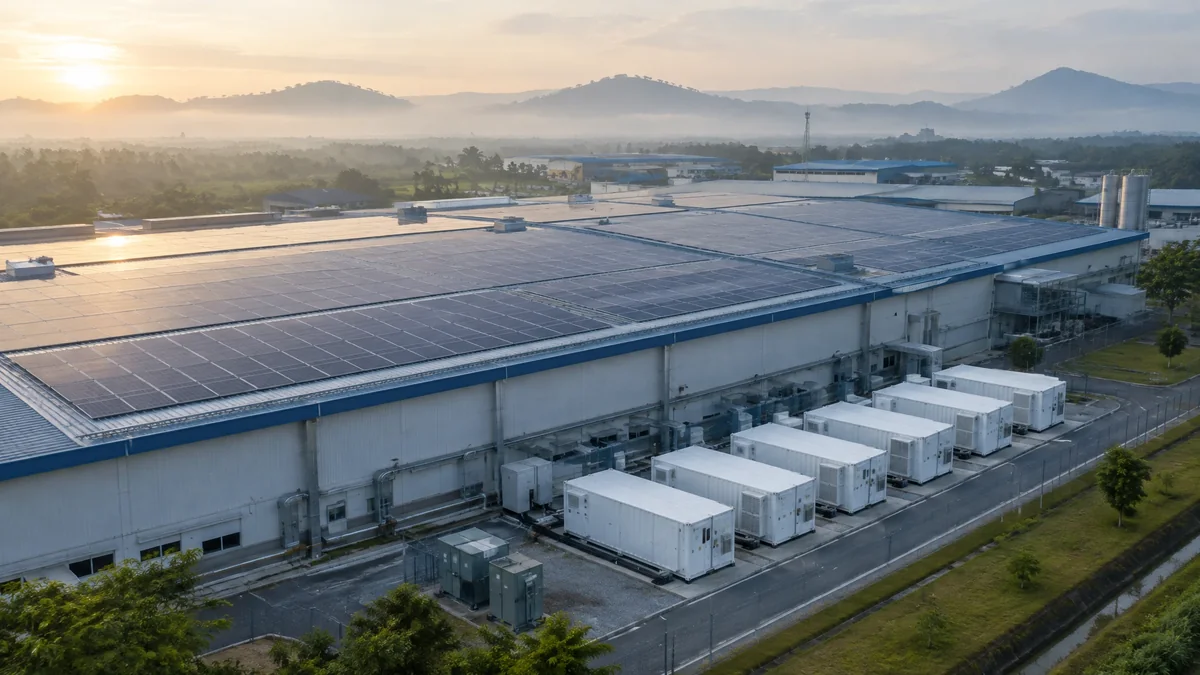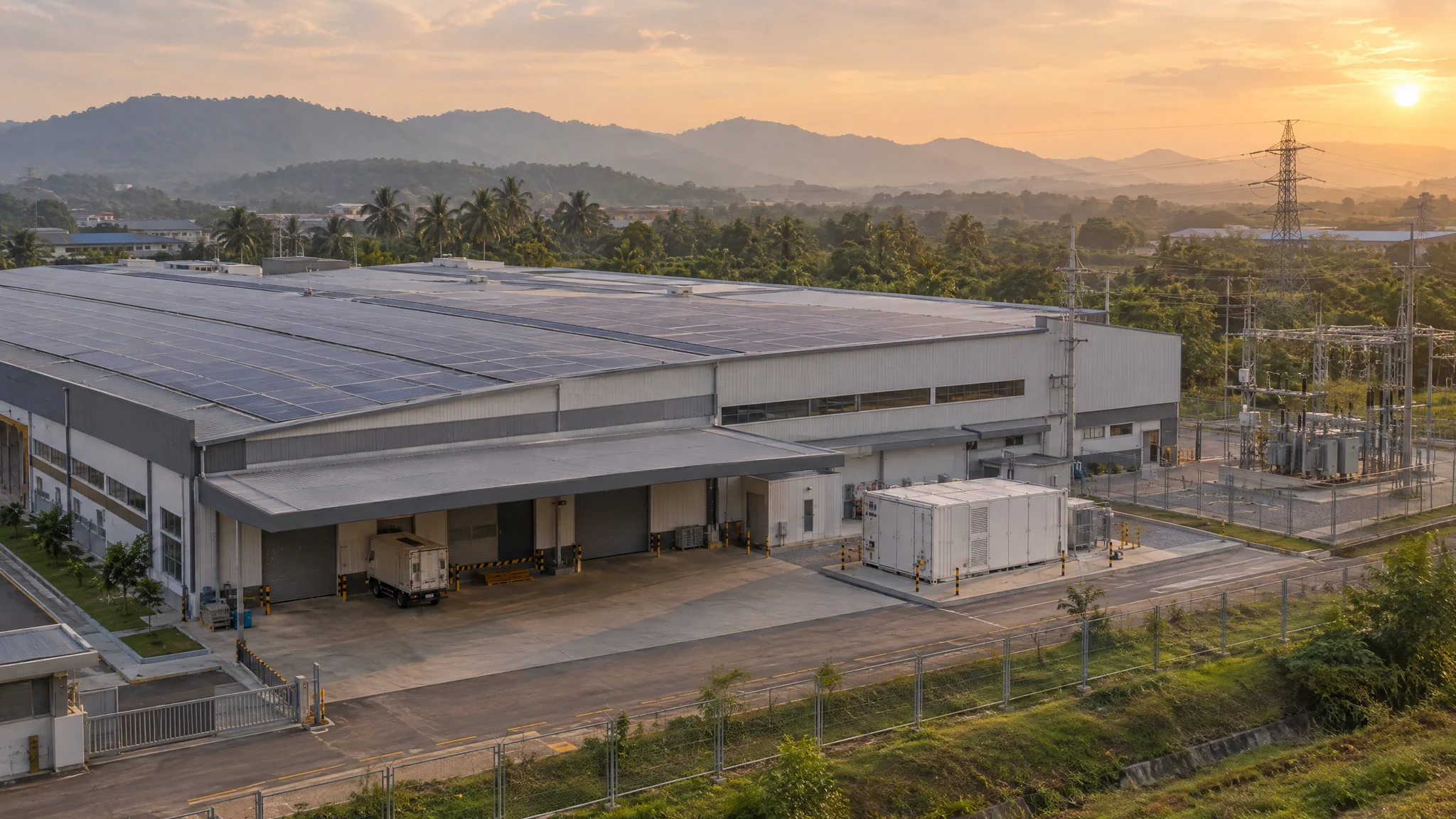
Energy security for businesses in Malaysia means having power when production needs it, an electricity cost you can plan around, and enough control over your own supply to ride out grid and price shocks. On-site solar paired with a battery energy storage system (BESS) improves each of these.
Key facts
- Under TNB’s tariff from 1 July 2025, medium-voltage sites pay RM89.27/kW a month (General) or RM97.06/kW (Time-of-Use) in capacity and network charges, billed on maximum demand.
- The Automatic Fuel Adjustment (AFA) is reset every month. It went from a rebate of 8.91 sen/kWh in November 2025 to a surcharge of 3.60 sen/kWh in November 2026.
- Peninsular customers averaged 46.93 minutes without supply in 2025, according to the Energy Commission.
- On 15 October 2025, lightning tripped the 2,242 MW Edra power plant in Melaka, and parts of Kuala Lumpur and Johor Bahru lost power for more than an hour.
What does energy security mean for a business?
For a factory, warehouse or commercial building, energy security is the ability to keep operating at a predictable cost, whatever happens on the grid or in fuel markets. Supply, price and control each carry their own risk.
| Part | The risk | What reduces it |
|---|---|---|
| Supply | Outages, trips and voltage dips stop production | BESS designed for backup, power quality fixes |
| Price | Demand charges and monthly fuel adjustments move your bill | Solar generation, peak shaving, load shifting |
| Control | All of your energy comes through one grid connection | Generating and storing energy on site |
Why has energy security become a board-level issue in Malaysia?
Because a larger share of the bill now depends on things a business does not set, mainly demand charges and the monthly fuel adjustment.
Peak demand is now expensive. TNB’s tariff from 1 July 2025 split the old maximum demand charge into capacity and network charges. On medium voltage, that is RM89.27/kW a month on the General tariff and RM97.06/kW on Time-of-Use. One unmanaged spike sets that charge for the whole month.
Fuel costs pass straight through. The Energy Commission resets the AFA every month from fuel cost data. It was a rebate from August 2025 to April 2026, then turned into a surcharge from May 2026: 3.80 sen/kWh in August, 3.61 in October and 3.60 in November 2026, as reported by paultan.org. A swing of more than 12 sen/kWh in a year is hard to budget for.
Tariff and AFA figures change. They are correct at the time of writing, so check your latest TNB bill.
How reliable is Malaysia’s grid?
Reliable on average. The Energy Commission’s performance booklet puts Peninsular Malaysia’s SAIDI (average minutes without supply per customer) at 46.93 minutes in 2025, down from 47.88 in 2024.
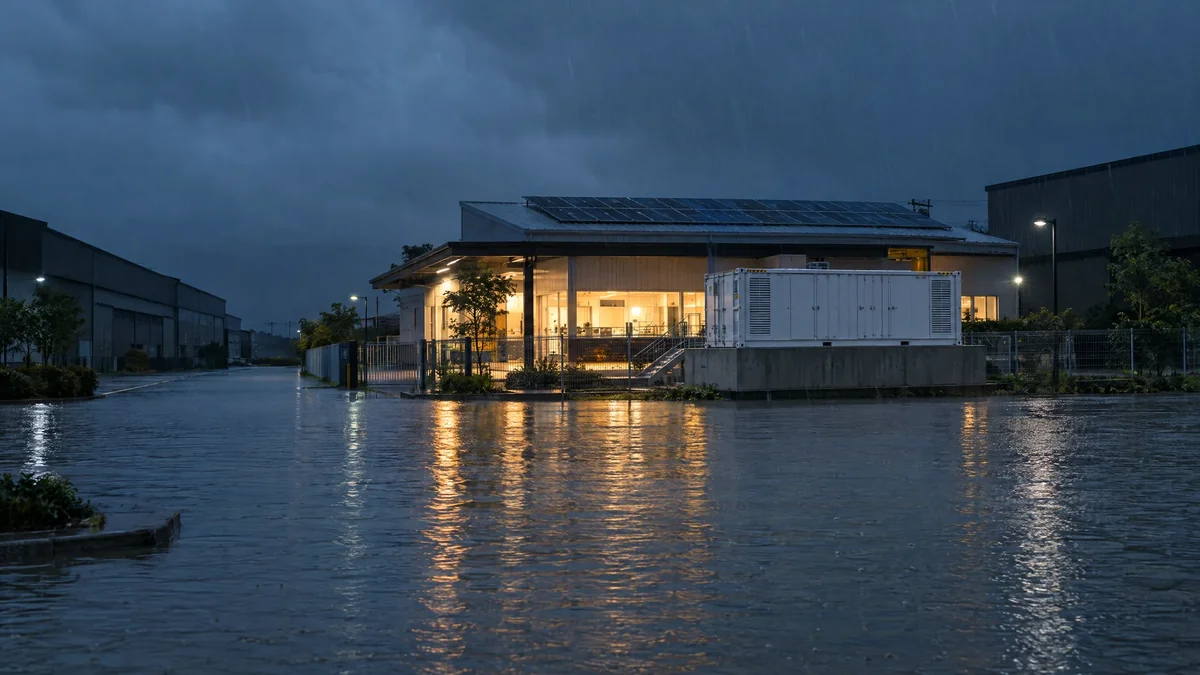
Averages do not help on the day a single event stops your line. When lightning tripped the Edra plant in Melaka on 15 October 2025, a plant equal to slightly over 10% of Peninsular peak demand went offline, and customers lost power for more than an hour, as The Edge reported. Floods, landslides and voltage dips add to that. We cover those events, and how to plan for them, in our guide to energy disaster recovery.
How do solar and battery storage improve energy security?
They move part of your supply, and part of your cost, on site.
- Price stability. Every kWh your solar system generates is a kWh you do not buy from the grid, so the AFA does not apply to it.
- Peak shaving. A BESS discharges when your load peaks, so the grid sees a lower maximum demand and your capacity and network charges fall with it.
- Load shifting. On a Time-of-Use tariff, stored energy covers part of the peak period on weekdays from 2pm to 10pm.
- More of your own solar used. Under Solar ATAP, exported energy is credited at the System Marginal Price. A battery keeps more of your midday surplus for your own loads.
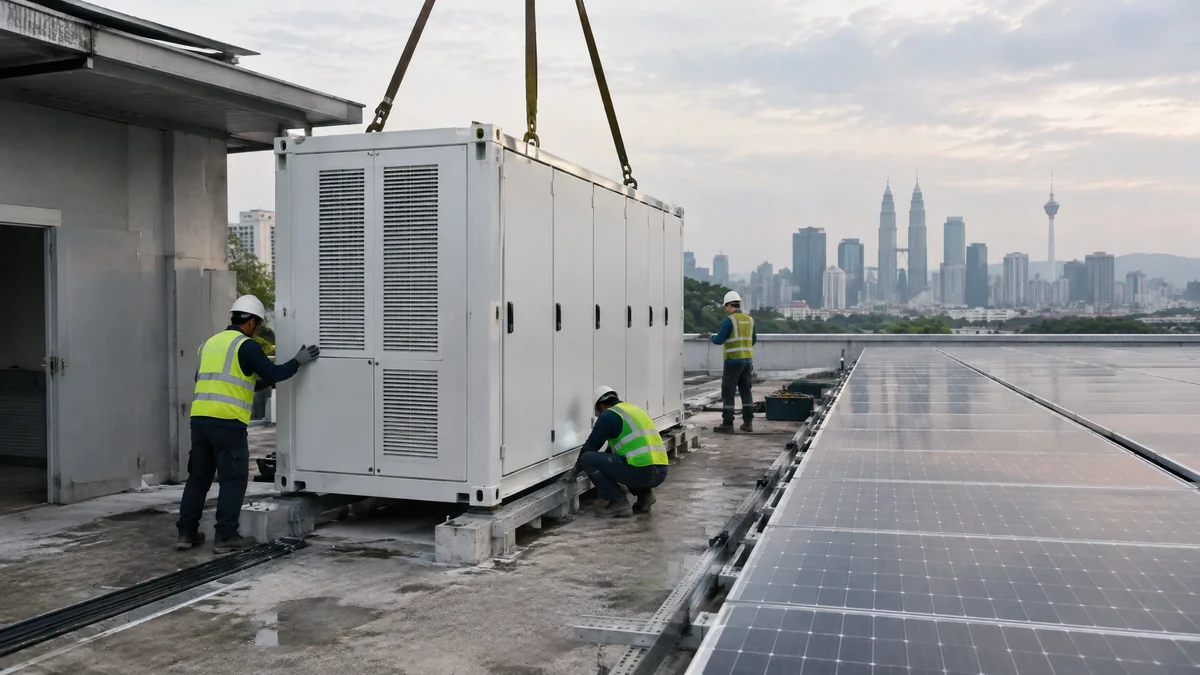
- Backup, when designed for it. A BESS can carry critical loads through an outage only if it is built for islanded operation with a transfer switch. A standard grid-tied system disconnects during a grid failure.
For a first estimate of the solar side, try our C&I solar ROI calculator.
Where should a business start?
Start with your own load data.
- Collect 12 months of TNB bills and, if you can, half-hourly interval data from your meter.
- Find your peaks. When do they happen, how long do they last, and which loads cause them?
- Size solar to your daytime load and roof or ground space, within the Solar ATAP limits.
- Size the battery to your peaks, and decide whether it also needs to back up critical loads.
- Compare financing. Direct purchase, a power purchase agreement (PPA) or green financing change how you pay for the system. The design stays the same.
How ERS Energy helps
We have engineered, procured, constructed and commissioned (EPCC) solar systems since 2009, across more than 2,000 projects. For commercial and industrial sites we design solar from 50 kWp to over 5 MWp and battery storage from 50 kWh to over 5 MWh as one system. On the utility side, ERS was behind two of the four bids shortlisted by the Energy Commission under its MyBeST battery storage programme. After handover, we offer operations and maintenance contracts of 5, 10 or 25 years. See our commercial and industrial solutions and C&I projects.
Frequently asked questions
How does a battery reduce my TNB bill under the 2025 tariff?
Medium-voltage capacity and network charges are billed per kW of monthly maximum demand: RM89.27/kW on General and RM97.06/kW on Time-of-Use. A battery discharges during your peaks, which lowers the demand TNB records. On Time-of-Use, it can also shift energy into the weekday peak period.
Does solar protect my business from AFA surcharges?
Partly. The AFA is charged on the energy you buy from the grid, so every kWh your solar system generates and you use on site avoids it. Energy you still import at night or on cloudy days is charged at the AFA rate for that month.
Will solar and a battery keep my factory running in a blackout?
Only if the system is designed for backup. Under the Energy Commission’s BESS safety guidelines, grid-connected batteries must disconnect during a grid failure. Backup needs a transfer switch or circuit breaker that isolates your site, and many businesses back up priority circuits rather than the whole plant.
Sources
Facts and figures may vary by the time you read this. This article is for general information only and is not financial, legal, tax or engineering advice. Always double-check key facts and figures with the relevant official source before relying on them.
Send us 12 months of TNB bills and we will model your peak demand, solar yield and battery size.
Request an assessment