Solar lowers a factory’s daytime grid purchases, and a battery energy storage system (BESS) lets the plant store that energy and choose when to use it. Together they cut the energy and maximum demand charges on a TNB bill and reduce exposure to tariff rises. Savings depend on your load profile and tariff.
Key facts
- For a manufacturer, power is one of the biggest operating costs, so each sen saved goes back into margin.
- Solar reduces your bill in every month it generates; ERS has 2 GWp+ installed across six markets.
- A BESS adds flexibility in how you generate, store and use energy.
- Maximum demand is your highest half-hour power draw in a month, and TNB charges for it; a battery can help lower it.
- Your TNB tariff category decides which savings apply.
Why is energy such a large cost for manufacturers?
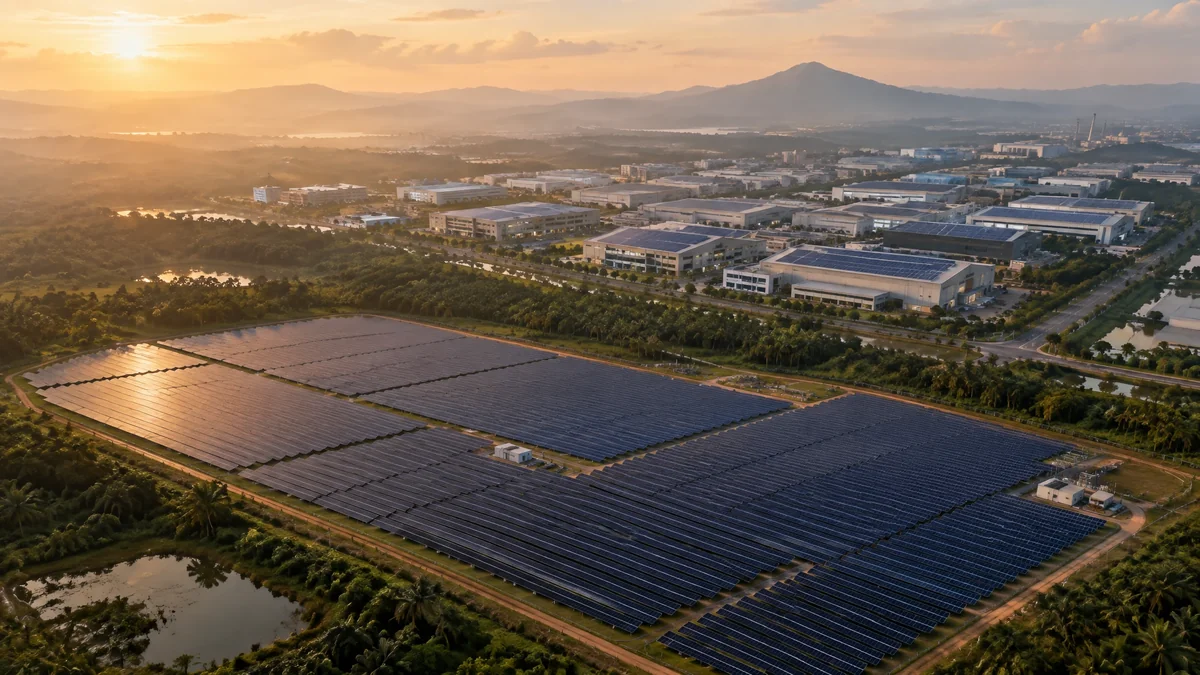
Manufacturing runs on power, and power is usually among the biggest operating costs. Every sen removed from the energy bill goes straight back into margin. That is why factories with large roof areas often look at solar first: it reduces the bill in every month it generates.
A well-designed system gives a factory more control over its own electricity demand. Our page on commercial and industrial solar covers the roof-based options.
What does a battery add to a factory solar system?
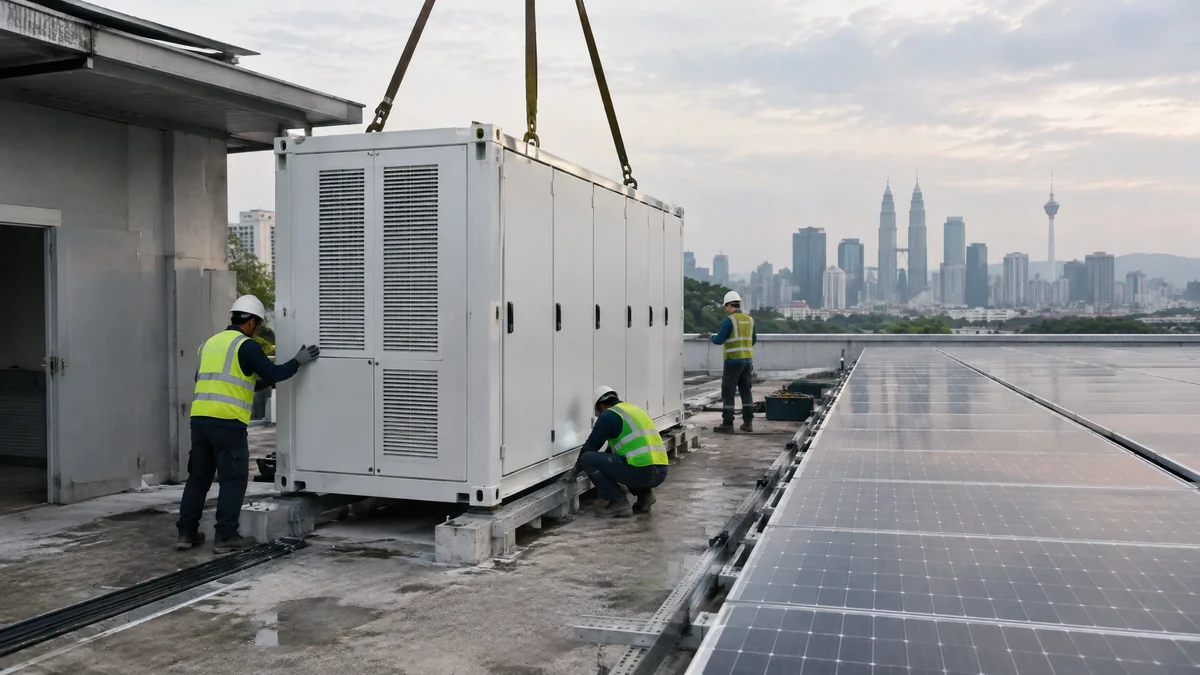
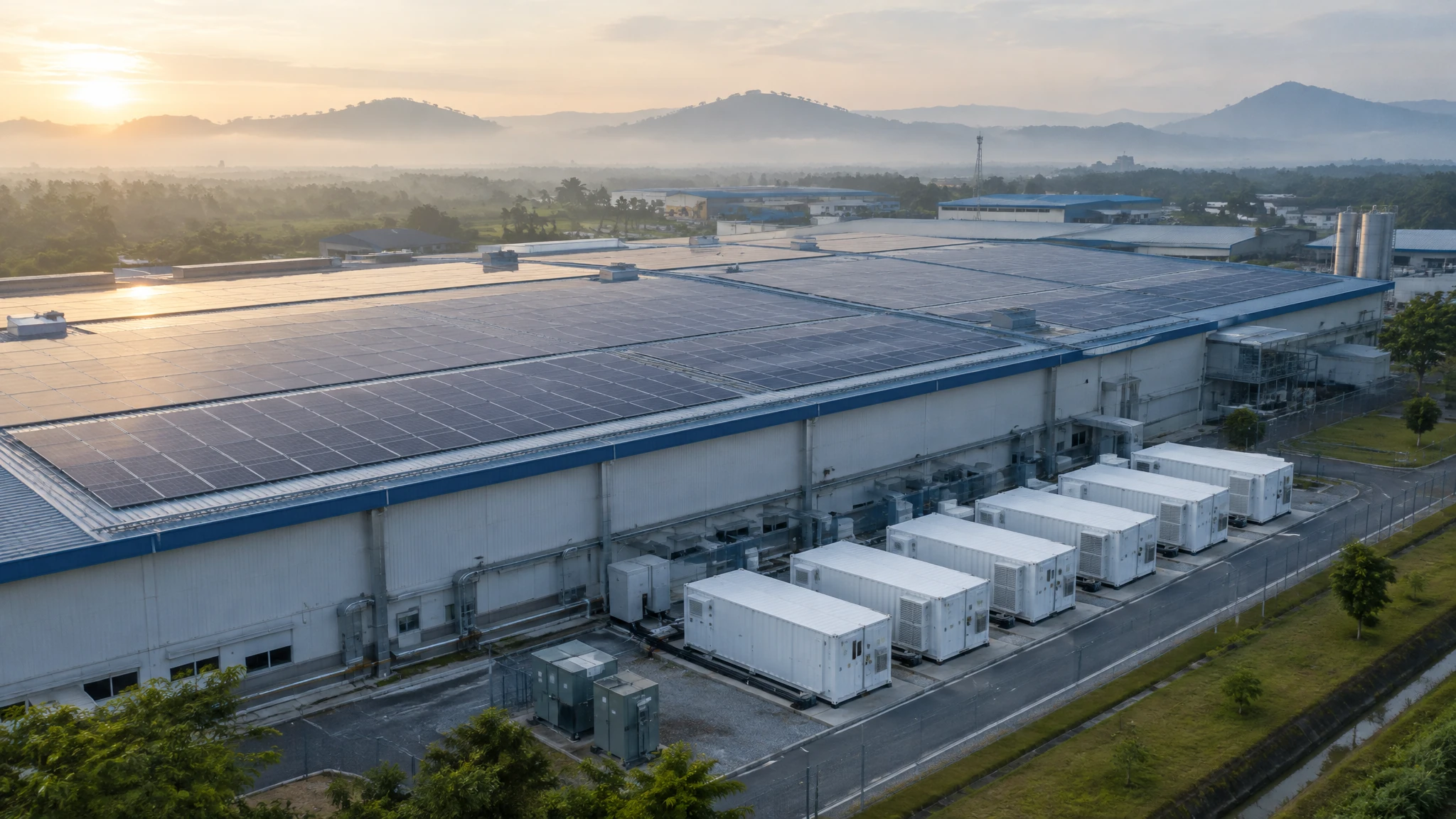
Solar alone produces when the sun shines, which rarely matches a plant’s load exactly. A BESS stores surplus solar energy and releases it later. For a factory, the economics come from three places:
- Energy charge: stored solar displaces grid purchases at the hours when your tariff is highest, where your category has peak and off-peak periods.
- Maximum demand: maximum demand is your highest half-hour power draw in a month, and TNB charges for it. A battery can discharge in those half-hours so the grid supplies less.
- Solar self-consumption: surplus midday solar is stored instead of exported, so more of what you generate is used on site.
TNB’s commercial and industrial tariffs combine energy charges with a maximum demand charge, and some categories use peak and off-peak periods (see TNB pricing and tariffs). Design should be based on your actual tariff category and half-hourly demand data.
How do you shield a factory from rising tariffs?
Each kilowatt-hour you generate and use on site is one you do not buy at the tariff, so your exposure to tariff rises falls. Illustration only, not a quote: a factory that buys 1,000,000 kWh a month and supplies 20 per cent of it from its own solar avoids buying 200,000 kWh at whatever the tariff then is. Adding storage extends that effect beyond sunlight hours. Operation and maintenance, panel degradation and financing still affect the true cost of that energy.
Whether a project is bought outright or financed is a separate decision. Our investment structuring page explains the options, and the C&I ROI page shows how returns are assessed.
How should a factory size solar and BESS?
Sizing starts with data, not catalogue sizes. A feasibility study typically draws on the following:
- Your latest electricity bill, and ideally twelve months of them.
- Half-hourly or interval demand data, where your meter provides it.
- Roof condition, available area and structural loading.
- Your financing preference and target payback, which varies widely with tariff category, load profile and system size.
Sizing and savings are always calculated for your own site, from your tariff category and demand profile.
What about factories that already have solar?
A battery can often be added later. See Can you add battery storage to an existing solar system? for the details. For the utility-scale side of storage in Malaysia, read What is MyBeST.
How ERS Energy helps
ERS Energy has been an engineering, procurement, construction and commissioning (EPCC) contractor since 2009, with 2 GWp+ installed across 2,000+ projects in six markets and ISO 9001, 14001 and 45001 certification. For factories we work from the feasibility study through design, installation and commissioning, sized to the tariff category and demand profile on your bill. Browse our C&I projects for examples.
Frequently asked questions
Is solar without a battery still worthwhile for a factory?
Often yes. Solar alone reduces daytime grid purchases and lowers bills. A battery is an addition when you want more control over timing or maximum demand. Your load profile and tariff decide which combination makes sense.
Can a BESS keep a whole factory running in an outage?
Only within its rated power and energy. Most designs back up selected critical loads rather than the whole plant. An engineer needs to know which lines must stay on and for how long before specifying the system.
How does a battery reduce the maximum demand charge?
Maximum demand is your highest half-hour draw from the grid in a month, and TNB charges for it. A battery can discharge during your peak half-hours so the grid supplies less at that moment. The saving depends on your tariff category and how predictable your peaks are.
Does ERS Energy offer solar and BESS together?
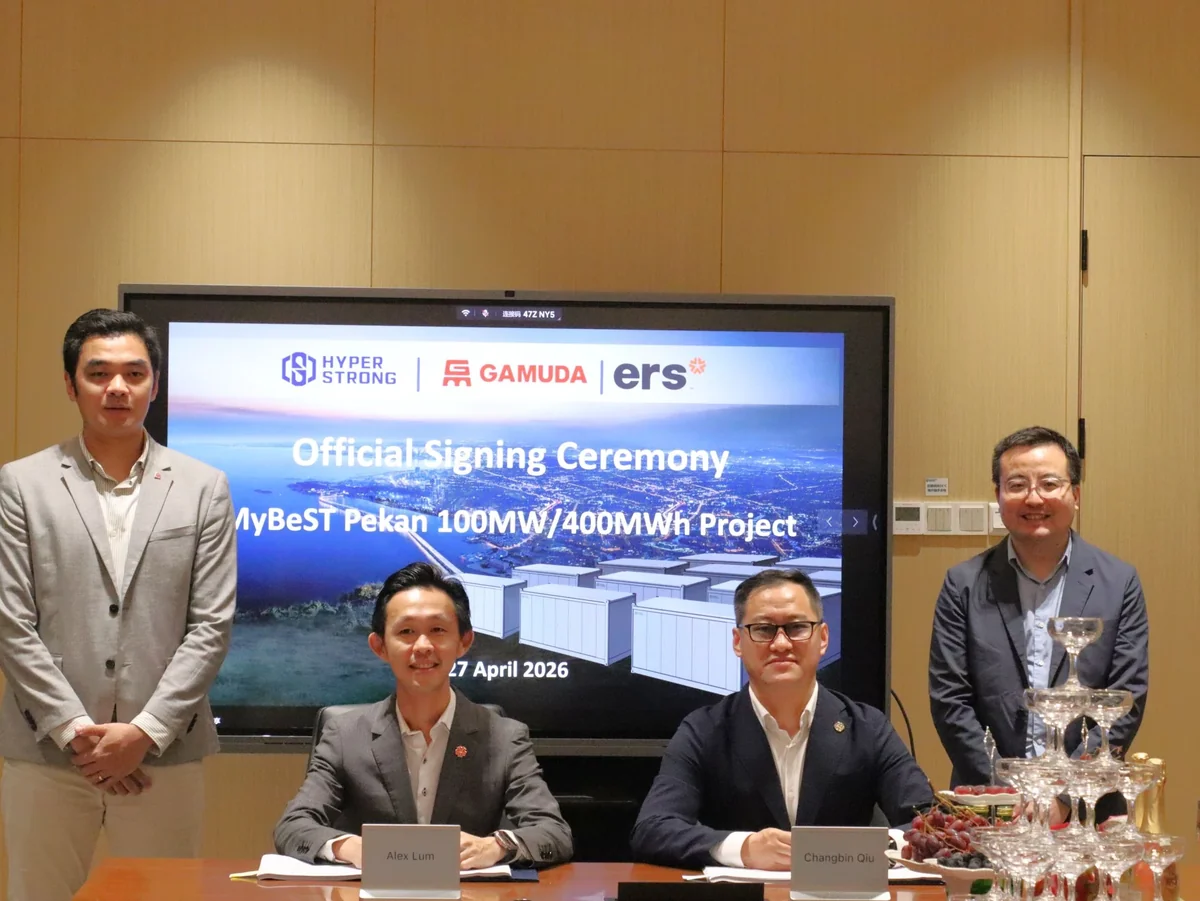
Yes. ERS Energy designs and builds solar PV and battery storage as integrated systems for commercial and industrial sites. It has also secured two grid-scale BESS projects under Malaysia’s MyBeST programme, due for commissioning in 2027.
Sources
Facts and figures may vary by the time you read this. This article is for general information only and is not financial, legal, tax or engineering advice. Always double-check key facts and figures with the relevant official source before relying on them.
Bring your last electricity bill, and an engineer can show what is possible for your facility.
Request a factory assessment